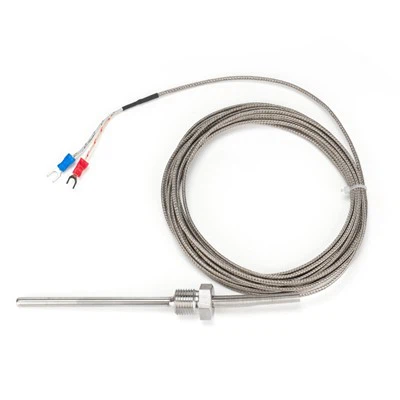
Can Thermocouples be Used in Explosive Environments?
As a thermocouple supplier, I often encounter inquiries from customers about the suitability of thermocouples in explosive environments. This is a critical question, as the safety and reliability of temperature measurement in such settings are of utmost importance. In this blog post, I will delve into the topic of using thermocouples in explosive environments, exploring the challenges, solutions, and best practices.
Understanding Explosive Environments
Explosive environments are areas where there is a risk of explosion due to the presence of flammable gases, vapors, dusts, or fibers. These environments are commonly found in industries such as oil and gas, chemical processing, mining, and pharmaceuticals. In these settings, any electrical equipment, including thermocouples, must be designed and installed to prevent the ignition of explosive mixtures.
Challenges of Using Thermocouples in Explosive Environments
The main challenge of using thermocouples in explosive environments is the potential for electrical sparks or heat generation, which can ignite the flammable substances. Thermocouples are electrical devices that generate a voltage proportional to the temperature difference between two junctions. This voltage is typically very small, but it can still pose a risk in explosive environments.
Another challenge is the need for proper installation and maintenance. Thermocouples must be installed in a way that prevents the entry of flammable substances into the electrical circuit. They must also be regularly inspected and maintained to ensure that they are functioning properly and do not pose a safety hazard.
Solutions for Using Thermocouples in Explosive Environments
To address the challenges of using thermocouples in explosive environments, several solutions are available. One solution is to use intrinsically safe thermocouples. Intrinsically safe thermocouples are designed to limit the energy available in the electrical circuit to a level that is not capable of igniting the flammable substances. These thermocouples are typically used in areas where the risk of explosion is relatively low.
Another solution is to use explosion-proof thermocouples. Explosion-proof thermocouples are designed to contain any explosion that may occur within the thermocouple housing. These thermocouples are typically used in areas where the risk of explosion is high.
In addition to using intrinsically safe or explosion-proof thermocouples, it is also important to follow proper installation and maintenance procedures. Thermocouples should be installed in accordance with the manufacturer's instructions and local safety regulations. They should also be regularly inspected and maintained to ensure that they are functioning properly and do not pose a safety hazard.


Types of Thermocouples for Explosive Environments
There are several types of thermocouples that are suitable for use in explosive environments. Some of the most common types include:
-
Surface Thermocouple: Surface thermocouples are designed to measure the temperature of a surface. They are typically used in applications where the temperature of a solid object needs to be measured. Surface Thermocouple
-
Armored Thermocouple: Armored thermocouples are designed to provide protection against mechanical damage and environmental factors. They are typically used in applications where the thermocouple needs to be installed in a harsh environment. Armored Thermocouple
-
Platinum-rhodium Thermocouples: Platinum-rhodium thermocouples are designed to provide high accuracy and stability over a wide temperature range. They are typically used in applications where the temperature needs to be measured with high precision. Platinum-rhodium Thermocouples
Best Practices for Using Thermocouples in Explosive Environments
To ensure the safe and reliable use of thermocouples in explosive environments, it is important to follow some best practices. These include:
-
Select the appropriate thermocouple: Choose a thermocouple that is suitable for the specific application and environment. Consider factors such as temperature range, accuracy, and safety requirements.
-
Follow proper installation procedures: Install the thermocouple in accordance with the manufacturer's instructions and local safety regulations. Ensure that the thermocouple is properly grounded and that all electrical connections are secure.
-
Perform regular maintenance: Regularly inspect and maintain the thermocouple to ensure that it is functioning properly and does not pose a safety hazard. Replace any damaged or worn components as needed.
-
Train personnel: Provide training to personnel who will be working with thermocouples in explosive environments. Ensure that they understand the safety risks and proper procedures for using and maintaining the thermocouples.
Conclusion
In conclusion, thermocouples can be used in explosive environments, but it is important to take the necessary precautions to ensure their safe and reliable operation. By selecting the appropriate thermocouple, following proper installation and maintenance procedures, and training personnel, you can minimize the risk of explosion and ensure the safety of your personnel and equipment.
If you are interested in purchasing thermocouples for use in explosive environments, please contact us to discuss your specific requirements. Our team of experts can help you select the right thermocouple for your application and provide you with the support and guidance you need to ensure its safe and reliable operation.
References
- "Electrical Equipment for Explosive Gas Atmospheres," International Electrotechnical Commission (IEC).
- "Thermocouples: Theory and Practice," by John R. Cimbala and John M. Cimbala.
- "Safety in Explosive Atmospheres," by the Health and Safety Executive (HSE).