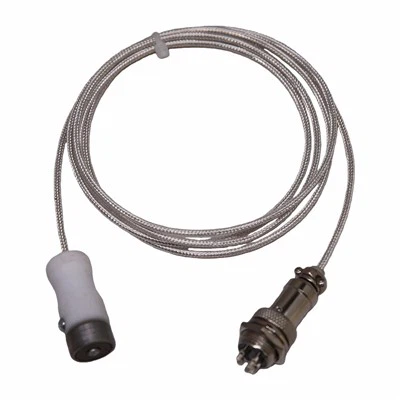
High-Temperature Precision: Platinum-rhodium thermocouples for Critical Applications

The Platinum-rhodium thermocouple is a premium noble metal temperature sensor renowned for exceptional accuracy, high-temperature resistance, and long-term stability. Designed with platinum-rhodium alloy as the positive electrode and pure platinum or platinum-rhodium alloy as the negative electrode, the Platinum-rhodium thermocouples operates on the Seebeck effect, generating a thermoelectric potential from temperature differences to deliver reliable readings. Whether in industrial furnaces, laboratory equipment, or aerospace testing, the Platinum-rhodium thermocouple outperforms ordinary thermocouples in harsh high-temperature environments, making it indispensable for scenarios where precision is non-negotiable.
Versatile Platinum-rhodium thermocouples Types for Targeted Needs
The Platinum-rhodium thermocouple family is classified by thermoelement material ratios to suit diverse high-temperature requirements. Below is a detailed breakdown of key variants:
|
Type (Index Number) |
Thermoelement Composition |
Temperature Range (℃) |
Core Advantages & Applications |
|
Type S (PtRh10-Pt) |
Positive: 10% rhodium-platinum alloy; Negative: Pure platinum |
0~1600 |
Most widely used; balances full-range precision; ideal for glass melting furnaces, laboratory high-temperature ovens |
|
Type B (PtRh30-PtRh6) |
Positive: 30% rhodium-platinum alloy; Negative: 6% rhodium-platinum alloy |
0~1800 |
Highest temperature limit; stable at ultra-high temperatures; suited for steel ladles, nuclear power components |
|
Type R (PtRh13-Pt) |
Positive: 13% rhodium-platinum alloy; Negative: Pure platinum |
0~1600 |
Higher precision than Type S; niche for calibration equipment and scientific research |


Premium Materials & Trusted Grades of Platinum-rhodium thermocouples
Every Platinum-rhodium thermocouple is crafted with top-tier materials to ensure performance under extreme conditions. Its thermoelements use high-purity platinum-rhodium alloys, while insulation relies on high-purity alumina ceramic tubes or magnesium oxide powder to prevent short circuits. Protective tubes vary by Operating conditions: corundum ceramic for regular high temperatures, and zirconia ceramic or high-purity graphite for ultra-high temperature or corrosive environments.
Following national standards, the Platinum-rhodium thermocouple offers two accuracy grades, with errors far lower than ordinary metal thermocouples:
|
Index Number |
Temperature Range (℃) |
Class Ⅰ Allowable Error |
Class Ⅱ Allowable Error |
|
Type S |
0~600 |
±1.5℃ |
±3.0℃ |
|
600~1600 |
±0.25%t |
±0.5%t |
|
|
Type B |
0~800 |
- (No Class Ⅰ) |
±4.0℃ |
|
800~1800 |
±0.25%t |
±0.5%t |
Note: t refers to the measured temperature value. Ideal for metallurgy, building materials, scientific research, and aerospace, the Platinum-rhodium thermocouple delivers consistent, precise data even in 1800℃ ultra-high temperatures, solidifying its reputation as a reliable choice for critical high-temperature measurement tasks.
Hot Tags: platinum-rhodium thermocouples, China platinum-rhodium thermocouples manufacturers, suppliers, factory, Assembled Thermocouple, thermocouple with sensor, R type platinum rhodium thermocouple, 625 platinum rhodium thermocouple, Magnetic Thermocouple, T type surface thermocouple