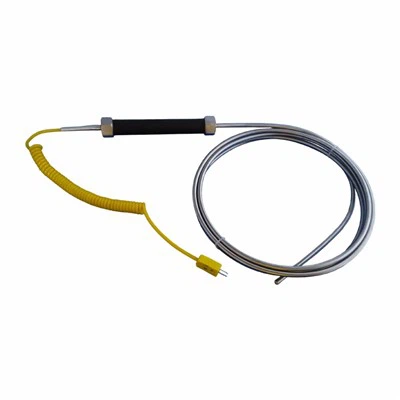
Can a radial thermometer measure surface temperature?
As a supplier of radial thermometers, I often encounter questions from customers about the capabilities of our products. One of the most common inquiries is whether a radial thermometer can measure surface temperature. In this blog post, I will delve into this topic and provide a comprehensive answer based on scientific principles and practical experience.
Understanding Radial Thermometers
Before we discuss the ability of radial thermometers to measure surface temperature, let's first understand what a radial thermometer is. A radial thermometer is a type of bimetallic thermometer that uses a bimetallic strip to measure temperature. The bimetallic strip consists of two different metals with different coefficients of thermal expansion. When the temperature changes, the bimetallic strip bends, and this bending is converted into a temperature reading on the thermometer scale.
Radial thermometers are commonly used in various industries, including food processing, HVAC, and industrial applications. They are known for their accuracy, reliability, and durability. These thermometers are available in different sizes and configurations to suit different applications.
Measuring Surface Temperature
Now, let's address the question: Can a radial thermometer measure surface temperature? The answer is yes, but with some limitations.
A radial thermometer can measure surface temperature if it is in direct contact with the surface. When the thermometer is placed on the surface, the bimetallic strip inside the thermometer senses the temperature of the surface and provides a reading. However, it is important to note that the accuracy of the measurement depends on several factors, such as the type of surface, the contact area, and the thermal conductivity of the surface.
Factors Affecting Surface Temperature Measurement
- Surface Type: Different surfaces have different thermal properties, which can affect the accuracy of the temperature measurement. For example, a metal surface conducts heat better than a plastic surface. Therefore, a radial thermometer may provide a more accurate reading on a metal surface compared to a plastic surface.
- Contact Area: The contact area between the thermometer and the surface also plays a crucial role in the accuracy of the measurement. A larger contact area ensures better heat transfer between the surface and the thermometer, resulting in a more accurate reading.
- Thermal Conductivity: The thermal conductivity of the surface determines how quickly heat is transferred from the surface to the thermometer. Surfaces with high thermal conductivity, such as metals, transfer heat more quickly than surfaces with low thermal conductivity, such as plastics.
Limitations of Radial Thermometers for Surface Temperature Measurement
While radial thermometers can measure surface temperature, they have some limitations. One of the main limitations is that they require direct contact with the surface. This means that they cannot measure the temperature of a surface from a distance. Additionally, radial thermometers may not be suitable for measuring the temperature of surfaces that are very hot or very cold, as the bimetallic strip may be damaged or lose its accuracy.
Applications of Radial Thermometers for Surface Temperature Measurement
Despite their limitations, radial thermometers are widely used for surface temperature measurement in various applications. Some of the common applications include:


- Food Processing: In the food industry, radial thermometers are used to measure the surface temperature of food products during processing and storage. This helps ensure that the food is cooked or stored at the correct temperature, which is essential for food safety.
- HVAC Systems: Radial thermometers are used in HVAC systems to measure the surface temperature of pipes, ducts, and other components. This helps ensure that the HVAC system is operating efficiently and effectively.
- Industrial Applications: In industrial applications, radial thermometers are used to measure the surface temperature of machinery, equipment, and other components. This helps monitor the performance of the equipment and detect any potential issues.
Other Types of Thermometers for Surface Temperature Measurement
In addition to radial thermometers, there are other types of thermometers that can be used for surface temperature measurement. Some of the common types include:
- Infrared Thermometers: Infrared thermometers measure the temperature of a surface by detecting the infrared radiation emitted by the surface. They are non-contact thermometers, which means that they can measure the temperature of a surface from a distance. Infrared thermometers are commonly used in applications where direct contact with the surface is not possible or desirable.
- Thermocouples: Thermocouples are temperature sensors that consist of two different metals joined together at one end. When the temperature changes, a voltage is generated at the junction of the two metals, which is proportional to the temperature. Thermocouples are commonly used in industrial applications where high accuracy and reliability are required.
Conclusion
In conclusion, a radial thermometer can measure surface temperature if it is in direct contact with the surface. However, the accuracy of the measurement depends on several factors, such as the type of surface, the contact area, and the thermal conductivity of the surface. While radial thermometers have some limitations, they are widely used for surface temperature measurement in various applications.
If you are looking for a reliable and accurate radial thermometer for surface temperature measurement, Radial Thermometer is a great option. Our radial thermometers are made of high-quality materials and are designed to provide accurate and reliable temperature measurements. We also offer a wide range of other thermometers, including Axial Thermometer and 304 Stainless Steel Bimetallic Thermometer, to meet your specific needs.
If you have any questions or would like to discuss your requirements, please feel free to contact us. We are always happy to help.
References
- "Bimetallic Thermometers: Principles and Applications." InstrumentationTools.com.
- "Surface Temperature Measurement Techniques." TemperatureMeasurement.net.
- "Thermometer Selection Guide." Omega Engineering.