

Your Professional Digital Temperature Controller Supplier
Jiangsu Zhaolong Electric Co., Ltd., located on Zhangguo Chang'an Road, Dainan Town, Xinghua City, Taizhou City, Jiangsu Province, is a high-tech enterprise specializing in the production and R&D of switches, temperature sensors, and temperature control instruments.It has applications across the entire spectrum, including steel, chemical, various machinery and equipment, environmental protection, petroleum, industrial furnaces, ovens, heating and refrigeration equipment, etc.
-
![High-precision Portable Thermometer]() High-precision Portable ThermometerThe Copper molten metal thermometer is a dedicated temperature measurement solution engineered to withstand the harsh conditions of copper and copper alloy processing—high temperatures...view more
High-precision Portable ThermometerThe Copper molten metal thermometer is a dedicated temperature measurement solution engineered to withstand the harsh conditions of copper and copper alloy processing—high temperatures...view more -
![Copper Molten Metal Thermometer]() Copper Molten Metal ThermometerThe Copper molten metal thermometer is a dedicated temperature measurement solution engineered to withstand the harsh conditions of copper and copper alloy processing—high temperatures...view more
Copper Molten Metal ThermometerThe Copper molten metal thermometer is a dedicated temperature measurement solution engineered to withstand the harsh conditions of copper and copper alloy processing—high temperatures...view more -
![Aluminum Molten Metal Thermometer]() Aluminum Molten Metal ThermometerThe product is a specialized sensor designed for aluminum alloy smelting, casting, and die-casting, addressing challenges like high temperatures (660~1200℃), aluminum liquid corrosion, and slag...view more
Aluminum Molten Metal ThermometerThe product is a specialized sensor designed for aluminum alloy smelting, casting, and die-casting, addressing challenges like high temperatures (660~1200℃), aluminum liquid corrosion, and slag...view more


Why Choose Us
Our Certificate
Our products are ISO9001:2008 and CE certified, ensuring reliable quality and compliance with international standards.
Global Market Support
We actively serve both domestic and international customers through efficient logistics, e-commerce, and professional export services.
Advanced Production Equipment
Equipped with advanced manufacturing and testing equipment, including laser welding machines, CNC lathes, automatic thermocouple production lines, oscilloscopes, semiconductor testers, and wave soldering lines, we ensure high production efficiency, precise manufacturing, and strict quality control throughout the entire production process.
Fast Response & Reliable Support
We offer one-on-one professional consultation to provide tailored solutions based on customer requirements. During production, we strictly control quality and delivery schedules while providing real-time order updates. Our comprehensive after-sales support ensures fast response times and long-term reliable cooperation.
Advantages of Digital Temperature Controller
High Precision and Accuracy
One of the most significant advantages of digital temperature controllers is their high precision and accuracy. Digital controllers use advanced algorithms and sensors to provide precise temperature measurements and control, ensuring that the desired temperature is maintained with minimal deviation.
User-Friendly Interfaces
Digital temperature controllers are designed with user-friendly interfaces that simplify operation and configuration. These interfaces enhance usability and allow for quick adjustments and monitoring.
Advanced Functionality
Digital temperature controllers come with advanced functionalities that offer greater control and flexibility compared to analog controllers.
Versatility
The versatility of digital temperature controllers allows them to be used in various applications, from simple to complex temperature regulation tasks.
Reliability and Durability
Digital temperature controllers are engineered for reliability and durability, ensuring long-term performance and minimal maintenance.
Energy Efficiency
Energy efficiency is a critical advantage of digital temperature controllers, as precise temperature regulation reduces energy consumption and operational costs.
Paramenters
|
Display mode |
LED display |
|
Basic error |
≤±1.0%F·S±1 word |
|
Resolution |
1℃ or 0.1℃ |
|
Control sensitivity |
≤±0.75%F·S |
|
Cold end compensation |
The error is less than 2℃ within the range 0℃~40℃ |
|
Sampling cycle of the meter |
3 times/s |
|
Output relay contact capacity |
Relay contact 220V resistance load≤3A; relay contact 220V conductive load≤1A |
|
Work environment |
Temperature 0℃~50℃, the relative humidity no more than 85% non-corrosiveness places |
|
Weight |
≤0.8kg |
Types of Digital Temperature Controller

Thermostats
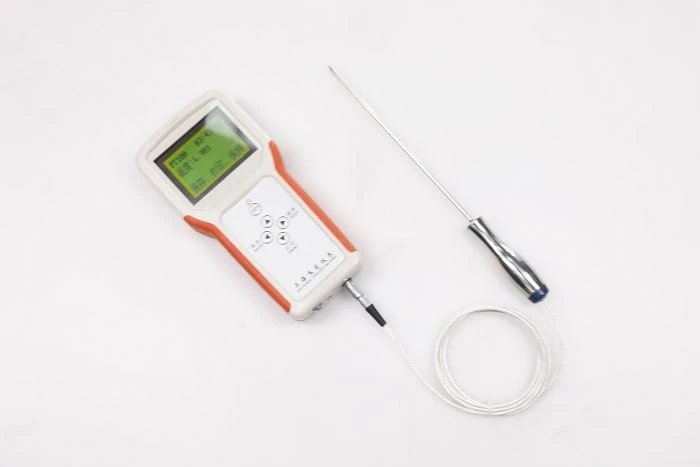
A thermostat is a contact-type temperature sensor consisting of a bi-metallic strip made up of two dissimilar metals such as aluminum, copper, nickel, or tungsten.
Thermistors
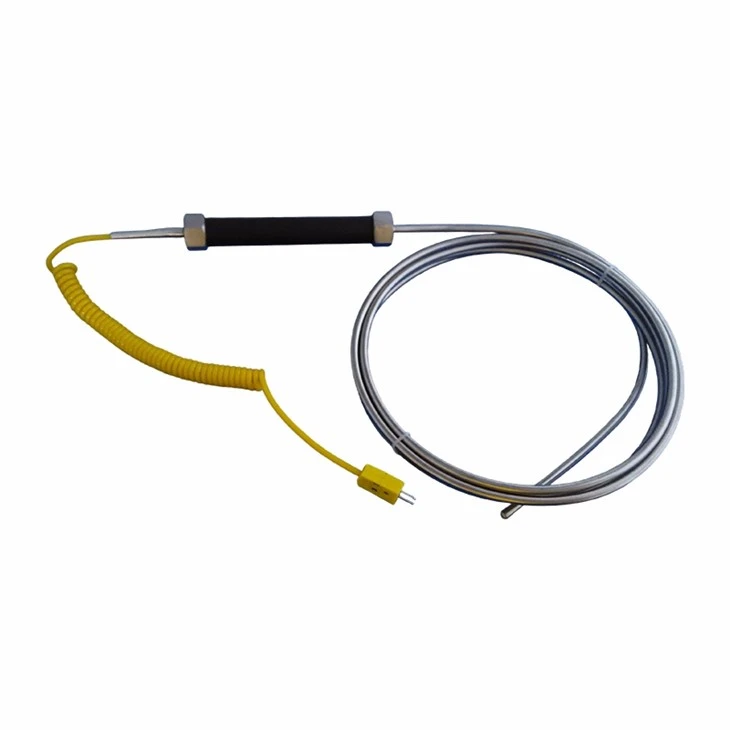
Thermistors or thermally sensitive resistors are the ones that change their physical appearance when subjected to a change in temperature. The thermistors are made up of ceramic material such as oxides of nickel, manganese, or cobalt coated in glass which allows them to deform easily.
Resistive Temperature Detectors (RTD)
RTDs are precise temperature sensors that are made up of high-purity conducting metals such as platinum, copper, or nickel wound into a coil. The electrical resistance of an RTD changes similar to that of a thermistor.

Thermocouples
One of the most common temperature sensors includes thermocouples because of their wide temperature operating range, reliability, accuracy, simplicity, and sensitivity.
Working principle of Digital Temperature Controller
Temperature controllersfunction based on a feedback loop mechanism. They continuously measure the system’s temperature and compare it to the desired setpoint. When the temperature deviates from the setpoint, the controller adjusts the heating or cooling process to bring it back to the required level.
Application of Digital Temperature Controller
Industrial Processes
Digital controllers are used in manufacturing processes, such as extrusion, injection molding, and chemical processing, where precise temperature control is crucial.
Laboratory and Research
In scientific research, digital controllers ensure accurate temperature conditions for experiments, incubation, and testing.
HVAC Systems
Digital controllers maintain optimal temperatures in heating, ventilation, and air conditioning systems for residential and commercial buildings.
Food and Beverage
In the food and beverage industry, digital controllers regulate temperatures during cooking, baking, fermentation, and storage, ensuring product quality and safety.
FAQ
We're well-known as one of the leading digital temperature controller manufacturers and suppliers in China, featured by quality products and low price. Please feel free to buy customized digital temperature controller made in China here from our factory. Contact us for more details.
digital temp controller, smart phone thermometer, digital temperature thermostat


