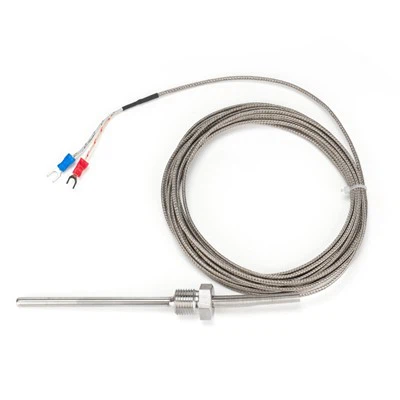
As a supplier of Axial Flexible Tube Thermometers, I've witnessed firsthand the critical role calibration plays in determining the accuracy of these essential instruments. In this blog post, I'll delve into the intricate relationship between calibration and accuracy, exploring how proper calibration can enhance the performance of Axial Flexible Tube Thermometers and why it's a crucial consideration for users across various industries.
Understanding Axial Flexible Tube Thermometers
Axial Flexible Tube Thermometers are widely used in industrial, commercial, and laboratory settings to measure temperature accurately. These thermometers feature a flexible tube that allows for easy installation in hard-to-reach places, making them ideal for applications where traditional thermometers may not be suitable. The flexibility of the tube also enables the thermometer to be bent or shaped to fit specific requirements, providing greater versatility in temperature measurement.
The basic principle behind Axial Flexible Tube Thermometers is the expansion and contraction of a liquid or gas inside the tube in response to changes in temperature. As the temperature rises, the liquid or gas expands, causing the thermometer's indicator to move along a scale. Conversely, as the temperature decreases, the liquid or gas contracts, and the indicator moves in the opposite direction. This simple yet effective mechanism allows for precise temperature measurement over a wide range of temperatures.
The Importance of Calibration
Calibration is the process of comparing the readings of a thermometer to a known standard to ensure its accuracy. Over time, factors such as mechanical stress, environmental conditions, and normal wear and tear can cause a thermometer to lose its accuracy. Calibration helps to identify and correct any deviations from the standard, ensuring that the thermometer provides reliable and consistent temperature readings.
Proper calibration is essential for maintaining the accuracy of Axial Flexible Tube Thermometers. Inaccurate temperature measurements can lead to a range of problems, including product quality issues, safety hazards, and inefficient processes. For example, in the food industry, inaccurate temperature measurements can result in undercooked or overcooked food, leading to foodborne illnesses. In the pharmaceutical industry, inaccurate temperature control can affect the stability and efficacy of medications. In industrial processes, inaccurate temperature measurements can lead to equipment failure and production delays.
How Calibration Affects Accuracy
Calibration affects the accuracy of Axial Flexible Tube Thermometers in several ways. First, it helps to ensure that the thermometer's readings are within an acceptable range of the true temperature. By comparing the thermometer's readings to a known standard, calibration can identify any systematic errors or biases in the measurement process. These errors can be caused by factors such as manufacturing tolerances, sensor drift, or improper installation. Calibration allows for the adjustment of the thermometer's readings to correct for these errors, ensuring that the thermometer provides accurate temperature measurements.
Second, calibration helps to improve the precision of the thermometer's readings. Precision refers to the degree of consistency and reproducibility of the thermometer's measurements. A well-calibrated thermometer will provide consistent readings over time, even when measuring the same temperature multiple times. This is important for applications where precise temperature control is required, such as in scientific research or industrial processes.
Third, calibration helps to extend the lifespan of the thermometer. By identifying and correcting any issues early on, calibration can prevent further damage to the thermometer and ensure its continued performance. Regular calibration also helps to maintain the thermometer's accuracy over time, reducing the need for frequent replacements.
Calibration Procedures
The calibration of Axial Flexible Tube Thermometers typically involves the following steps:
- Selection of a Calibration Standard: A calibration standard is a known reference temperature source that is used to compare the thermometer's readings. The calibration standard should be traceable to a national or international standard to ensure its accuracy.
- Preparation of the Thermometer: Before calibration, the thermometer should be cleaned and inspected for any damage or wear. The thermometer should also be allowed to reach thermal equilibrium with the calibration environment to ensure accurate readings.
- Calibration Process: The thermometer is placed in the calibration environment and allowed to stabilize. The thermometer's readings are then compared to the calibration standard, and any deviations are recorded. If necessary, the thermometer's readings are adjusted to correct for the deviations.
- Verification of Calibration: After calibration, the thermometer is tested again to verify its accuracy. The thermometer's readings should be within an acceptable range of the calibration standard to ensure its continued performance.
Factors Affecting Calibration
Several factors can affect the calibration of Axial Flexible Tube Thermometers, including:
- Environmental Conditions: The calibration environment should be stable and free from any external factors that could affect the thermometer's readings. Factors such as temperature, humidity, and air flow can all affect the accuracy of the thermometer's measurements.
- Calibration Frequency: The frequency of calibration depends on the application and the manufacturer's recommendations. In general, thermometers should be calibrated at least once a year or more frequently if they are used in critical applications.
- Calibration Equipment: The calibration equipment used should be accurate and reliable. The calibration equipment should also be regularly maintained and calibrated to ensure its continued performance.
- Operator Skill: The operator performing the calibration should be trained and experienced in the calibration process. The operator should also follow the manufacturer's instructions and procedures to ensure accurate and reliable calibration.
Conclusion
In conclusion, the calibration of Axial Flexible Tube Thermometers is essential for ensuring their accuracy and reliability. Proper calibration helps to identify and correct any deviations from the standard, ensuring that the thermometer provides accurate and consistent temperature readings. By following the calibration procedures and considering the factors that affect calibration, users can ensure the continued performance of their Axial Flexible Tube Thermometers.
If you're in the market for high-quality Axial Flexible Tube Thermometers or other temperature measurement instruments, we invite you to [contact us] for more information. Our team of experts can help you select the right thermometer for your application and provide you with the support and resources you need to ensure its proper calibration and use.


References
- [1] ASTM E77 - Standard Test Method for Inspection and Verification of Thermometers
- [2] ISO 9001 - Quality Management Systems - Requirements
- [3] NIST Handbook 44 - Specifications, Tolerances, and Other Technical Requirements for Weighing and Measuring Devices
[Contact us] to discuss your specific requirements and explore how our Axial Flexible Tube Thermometers can meet your needs. Our team is ready to assist you in finding the best solutions for your temperature measurement challenges. Whether you're looking for a Shock-resistant Bimetallic Thermometer, a Radial Thermometer, or a Bimetallic Thermometer with Electrical Contact, we have the expertise and products to support your business.