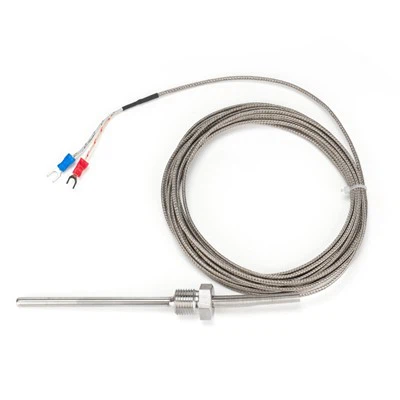
As a supplier of bimetallic thermometers, I often encounter questions from customers regarding the response time of these essential temperature - measuring devices. Understanding the response time of a bimetallic thermometer is crucial for various applications, as it directly impacts the accuracy and efficiency of temperature monitoring.
What is Response Time?
Response time refers to the time it takes for a thermometer to reach a specified percentage (usually 90% or 95%) of the final temperature value when exposed to a step - change in temperature. In the context of bimetallic thermometers, this response time is influenced by several factors, including the design of the thermometer, the materials used, and the environment in which it operates.
Factors Affecting the Response Time of Bimetallic Thermometers
1. Design of the Bimetallic Strip
The bimetallic strip is the heart of a bimetallic thermometer. It consists of two different metals bonded together. When the temperature changes, the two metals expand or contract at different rates, causing the strip to bend. The thickness, length, and shape of the bimetallic strip can significantly affect the response time. A thinner and shorter strip will generally respond more quickly to temperature changes because it has less mass and can reach the new temperature more rapidly. For example, a thermometer with a narrow and short bimetallic strip will have a faster response time compared to one with a thick and long strip.
2. Heat Transfer Properties
The ability of the thermometer to transfer heat from the surrounding environment to the bimetallic strip is another critical factor. If the thermometer has a good heat - conducting material in contact with the bimetallic strip, heat can be transferred more efficiently, reducing the response time. For instance, thermometers with a metal housing that is in direct contact with the bimetallic strip can transfer heat faster than those with a plastic housing.


3. Ambient Conditions
The environment in which the thermometer is used also plays a role in the response time. In a high - velocity air or liquid flow, heat transfer is enhanced, and the thermometer can reach the new temperature more quickly. On the other hand, in a stagnant environment, the response time may be longer. Additionally, extreme temperatures can affect the performance of the bimetallic strip. At very low temperatures, the metals may become less flexible, slowing down the response, while at very high temperatures, the strip may experience mechanical stress that can also impact the response time.
Measuring the Response Time
To measure the response time of a bimetallic thermometer, a step - change in temperature is applied. The thermometer is first placed in an environment at a known temperature. Then, it is suddenly moved to a new environment with a different temperature. The time it takes for the thermometer to reach 90% or 95% of the new temperature is recorded. This process can be repeated multiple times to obtain an average response time.
Importance of Response Time in Different Applications
1. Industrial Processes
In industrial settings, such as chemical manufacturing or food processing, the response time of a bimetallic thermometer can be critical. In chemical reactions, precise temperature control is necessary to ensure the quality and safety of the products. A thermometer with a fast response time can quickly detect temperature changes and allow operators to make timely adjustments. For example, in a distillation process, a rapid - response thermometer can help prevent over - heating or under - heating, which could lead to product degradation or safety hazards.
2. HVAC Systems
In heating, ventilation, and air - conditioning (HVAC) systems, the response time of thermometers affects the efficiency of temperature regulation. A fast - responding thermometer can accurately sense changes in room temperature and trigger the HVAC system to adjust the heating or cooling output accordingly. This helps maintain a comfortable indoor environment and reduces energy consumption.
3. Medical Applications
In medical applications, such as measuring body temperature, a fast - response thermometer is essential for accurate and timely diagnosis. A bimetallic thermometer with a short response time can quickly provide an accurate temperature reading, allowing medical professionals to make informed decisions about patient care.
Our Bimetallic Thermometers and Response Time
At our company, we offer a wide range of bimetallic thermometers, each designed to meet specific application requirements. Our Remote Transmission Bimetallic Thermometer is engineered for applications where remote temperature monitoring is needed. It has a well - designed bimetallic strip and a high - quality heat - conducting housing, ensuring a relatively fast response time. This thermometer is suitable for industrial processes where real - time temperature data is crucial.
Our 304 Stainless Steel Bimetallic Thermometer is made of 304 stainless steel, which not only provides excellent corrosion resistance but also has good heat - transfer properties. The use of this material helps to reduce the response time of the thermometer, making it ideal for applications in harsh environments, such as chemical plants or food processing facilities.
The Radial Thermometer in our product line is designed with a unique radial shape, which allows for a more efficient heat transfer to the bimetallic strip. This design feature results in a fast response time, making it suitable for applications where quick temperature changes need to be monitored, such as in refrigeration systems.
Conclusion
The response time of a bimetallic thermometer is a critical parameter that affects its performance in various applications. By understanding the factors that influence the response time and choosing the right thermometer for the specific application, users can ensure accurate and efficient temperature monitoring.
If you are in need of high - quality bimetallic thermometers with excellent response times, we invite you to contact us for a detailed discussion on your requirements. Our team of experts is ready to assist you in selecting the most suitable thermometer for your application.
References
- "Temperature Measurement Handbook", John Wiley & Sons
- "Industrial Temperature Measurement", CRC Press
- "Principles of Temperature Measurement", Oxford University Press