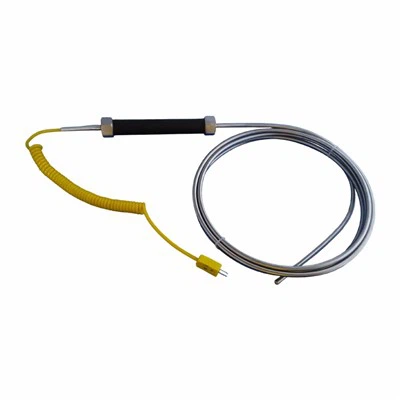
Hey there! As a supplier of Explosion-proof Thermocouple, I've been getting a lot of questions about the influence of magnetic fields on these devices. So, I thought I'd take a deep dive into this topic and share what I've learned.
First off, let's talk about what an explosion-proof thermocouple is. It's a type of temperature sensor that's designed to work in hazardous environments where there's a risk of explosion. These thermocouples are built with special materials and construction techniques to prevent sparks or heat from igniting flammable gases or vapors. They're commonly used in industries like oil and gas, chemical processing, and mining.
Now, onto the magnetic fields. Magnetic fields are all around us, and they can come from a variety of sources, such as electrical equipment, power lines, and even the Earth's magnetic field. When it comes to explosion-proof thermocouples, magnetic fields can have both positive and negative effects.
On the positive side, some thermocouples are designed to use magnetic fields to their advantage. For example, Magnetic Thermocouple use magnetic properties to enhance their performance. These thermocouples can be more sensitive to temperature changes and can provide more accurate readings. They're often used in applications where high precision is required, such as in scientific research or in the aerospace industry.
However, magnetic fields can also cause problems for explosion-proof thermocouples. One of the main issues is electromagnetic interference (EMI). EMI occurs when a magnetic field disrupts the electrical signals in the thermocouple, causing inaccurate readings or even complete failure. This can be a serious problem in hazardous environments, where accurate temperature measurements are crucial for safety.
To minimize the effects of EMI, explosion-proof thermocouples are often shielded. Shielding involves wrapping the thermocouple in a conductive material, such as copper or aluminum, to block the magnetic field. This helps to protect the electrical signals and ensure accurate readings.
Another way to reduce the impact of magnetic fields is to use Armored Thermocouple. These thermocouples are encased in a protective sheath, which provides an extra layer of insulation and protection against EMI. The armor also helps to prevent physical damage to the thermocouple, making it more durable and reliable.


In addition to shielding and armoring, it's also important to install explosion-proof thermocouples correctly. This means keeping them away from sources of magnetic fields, such as motors, transformers, and power lines. It's also a good idea to use proper grounding techniques to reduce the risk of EMI.
So, what does all this mean for you as a potential buyer? Well, if you're working in a hazardous environment where magnetic fields are present, it's important to choose an explosion-proof thermocouple that's designed to withstand these conditions. Look for thermocouples that are shielded and armored, and make sure they're installed correctly.
At our company, we offer a wide range of explosion-proof thermocouples that are designed to meet the needs of various industries. Our thermocouples are built with high-quality materials and advanced technology to ensure accurate and reliable temperature measurements. We also provide expert advice and support to help you choose the right thermocouple for your application.
If you're interested in learning more about our explosion-proof thermocouples or have any questions about the influence of magnetic fields, please don't hesitate to contact us. We'd be happy to discuss your needs and provide you with a free quote. Let's work together to find the best solution for your temperature measurement requirements.
References
- Some general knowledge about thermocouples from industry textbooks and research papers on temperature sensors.
- Technical specifications and application notes provided by thermocouple manufacturers.