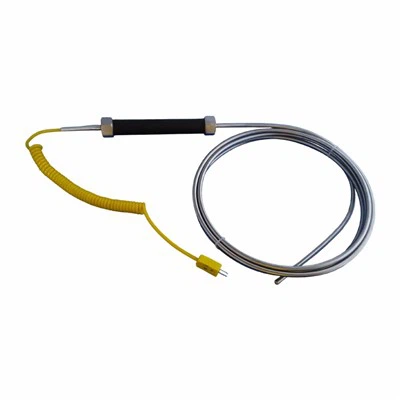
Hey there! As a supplier of wire thermocouples, I often get asked about how accurate these little devices really are. So, I thought I'd take a deep dive into this topic and share some insights with you.
First off, let's quickly go over what wire thermocouples are. They're basically temperature sensors made of two different metal wires joined at one end. When there's a temperature difference between the joined end (the hot junction) and the other end (the cold junction), a voltage is generated. This voltage can then be measured and used to figure out the temperature at the hot junction.


Now, the accuracy of wire thermocouples can vary quite a bit. It depends on a bunch of factors, and I'll break them down for you.
Types of Thermocouples and Their Accuracy
There are several types of wire thermocouples, each with its own characteristics and accuracy levels.
Tungsten-rhenium Thermocouple
One type is the Tungsten-rhenium Thermocouple. These are great for high - temperature applications. They can handle temperatures up to around 2300°C. However, their accuracy can be affected by things like the purity of the metals used. If the tungsten and rhenium aren't of high quality, it can lead to errors in temperature measurement. Generally, in well - calibrated setups, they can have an accuracy of around ±1% of the measured temperature or a few degrees Celsius, depending on the specific model and application.
Armored Thermocouple
Then there's the Armored Thermocouple. These are protected by a metal sheath, which makes them more durable and resistant to mechanical damage. The accuracy of armored thermocouples can be quite good, usually within ±0.75% of the measured temperature. But again, it can be influenced by factors like the quality of the sheath material and the installation process. If the sheath isn't properly installed or if it gets damaged, it can affect the accuracy.
Explosion - proof Thermocouple
The Explosion - proof Thermocouple is designed for use in hazardous environments. These thermocouples need to meet strict safety standards. Their accuracy is also important, as incorrect temperature readings in an explosive environment can be extremely dangerous. Typically, they have an accuracy similar to other types, around ±1% or so, but it can vary depending on the specific design and the quality of the components.
Factors Affecting Accuracy
Let's talk about some of the factors that can mess with the accuracy of wire thermocouples.
Temperature Range
The accuracy of a thermocouple can change depending on the temperature it's measuring. Most thermocouples are calibrated for a specific temperature range. If you try to use them outside of this range, the accuracy can go down. For example, a thermocouple that's calibrated for low - temperature applications might not be very accurate when measuring high temperatures, and vice versa.
Installation
How you install the thermocouple matters a lot. If it's not installed correctly, it can lead to inaccurate readings. For instance, if the hot junction isn't in good contact with the object whose temperature you're measuring, heat transfer might be affected, and the reading won't be accurate. Also, if the thermocouple is exposed to external factors like drafts or electromagnetic interference during installation, it can cause errors.
Aging and Wear
Over time, thermocouples can wear out. The metals in the wires can oxidize or corrode, which can change their electrical properties. This, in turn, can affect the accuracy of the temperature measurement. Regular calibration and maintenance can help mitigate these issues, but eventually, the thermocouple might need to be replaced.
Calibration
Calibration is crucial for accurate temperature measurement. A thermocouple that's not calibrated correctly can give readings that are way off. Calibration involves comparing the thermocouple's output to a known temperature source. If the calibration isn't done properly or if it's not done often enough, the accuracy of the thermocouple will suffer.
How to Ensure Accuracy
So, how can you make sure your wire thermocouples are as accurate as possible?
Choose the Right Type
Selecting the right type of thermocouple for your application is key. Consider the temperature range, the environment, and any specific requirements. For example, if you're working in a high - temperature, corrosive environment, a tungsten - rhenium thermocouple might be a good choice.
Proper Installation
Make sure to follow the manufacturer's instructions for installation. Ensure that the hot junction is in good contact with the object being measured and that the thermocouple is protected from external factors.
Regular Calibration
Set up a regular calibration schedule. This will help catch any accuracy issues early on and ensure that your thermocouples are providing reliable temperature readings.
Maintenance
Keep an eye on the condition of your thermocouples. Look for signs of wear, corrosion, or damage. If you notice any issues, take appropriate action, such as replacing the thermocouple.
Conclusion
In conclusion, the accuracy of wire thermocouples can be quite good, but it depends on a variety of factors. By choosing the right type, installing them correctly, calibrating regularly, and maintaining them properly, you can get accurate temperature measurements.
If you're in the market for wire thermocouples and want to ensure you're getting high - quality, accurate products, feel free to reach out. We're here to help you find the right thermocouples for your needs and answer any questions you might have. Let's start a conversation and see how we can work together to meet your temperature measurement requirements.
References
- "Thermocouple Handbook" - A comprehensive guide on thermocouples and their applications.
- Manufacturer's specifications for various types of wire thermocouples.