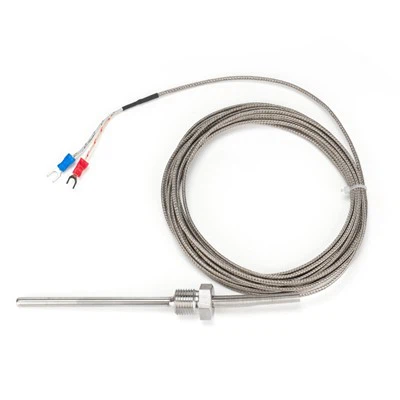
In the realm of industrial instrumentation and temperature measurement, compensating conductors play a crucial role, especially in low - temperature environments. As a supplier of compensating conductors, I am well - versed in how these conductors operate under such challenging conditions.
The Basics of Compensating Conductors
Compensating conductors are designed to extend the thermocouple circuit from the measuring point to the instrument. They are made of materials that have similar thermoelectric properties to the thermocouple they are paired with. This similarity ensures that the voltage generated along the compensating conductor is consistent with the voltage that would be generated by the thermocouple itself over the same temperature range.


In a normal operating environment, the compensating conductor acts as a seamless extension of the thermocouple. It allows for accurate temperature measurement by transmitting the thermoelectric signal from the hot junction (where the temperature is being measured) to the cold junction (connected to the measuring instrument).
Challenges in Low - Temperature Environments
Low - temperature environments present unique challenges for compensating conductors. One of the primary issues is the change in the thermoelectric properties of the conductor materials. As the temperature drops, the electrical resistance of the conductor may increase, which can lead to signal attenuation. This attenuation can cause inaccuracies in temperature measurement, as the voltage signal reaching the measuring instrument may not accurately represent the actual temperature at the measuring point.
Another challenge is the brittleness of the conductor materials at low temperatures. Some materials that are flexible at normal temperatures can become brittle in cold environments, increasing the risk of breakage. This can disrupt the electrical connection and render the temperature measurement system inoperable.
How Compensating Conductors Work in Low - Temperature Environments
Material Selection
To overcome the challenges in low - temperature environments, careful material selection is crucial. We offer a range of compensating conductors made from materials that are specifically designed to perform well in cold conditions. For example, the KX - K High Temperature Compensation Line is made from materials that have excellent thermoelectric stability at low temperatures. These materials are able to maintain a consistent thermoelectric output, even as the temperature drops, ensuring accurate temperature measurement.
The TX - T High Temperature Compensation Line is another option. It is engineered to be more flexible at low temperatures, reducing the risk of breakage. The flexibility of the conductor helps to maintain the integrity of the electrical connection, even in harsh cold environments.
Insulation and Protection
In addition to material selection, proper insulation and protection are essential for compensating conductors in low - temperature environments. The insulation materials used must be able to withstand the cold without cracking or losing their insulating properties. Our KC - K Ordinary Compensation Line is equipped with high - quality insulation that provides excellent protection against the cold. The insulation not only helps to prevent signal interference but also protects the conductor from physical damage due to the cold.
Signal Amplification and Compensation
To counteract the signal attenuation that can occur in low - temperature environments, signal amplification and compensation techniques are often employed. Our compensating conductors are designed to work in conjunction with signal amplifiers and compensators. These devices can boost the weak thermoelectric signal generated by the thermocouple and correct for any errors caused by the change in the conductor's properties at low temperatures.
Real - World Applications
Compensating conductors are widely used in various industries that operate in low - temperature environments. In the food processing industry, for example, accurate temperature measurement is crucial for ensuring the quality and safety of food products. Compensating conductors are used to measure the temperature of refrigeration units, freezers, and cold storage facilities.
In the aerospace industry, where components are exposed to extremely low temperatures during flight, compensating conductors are used to monitor the temperature of critical systems. The ability of these conductors to perform accurately in cold conditions is essential for the safe operation of aircraft.
Quality Control and Testing
As a supplier of compensating conductors, we take quality control and testing very seriously. All of our products undergo rigorous testing to ensure their performance in low - temperature environments. We use state - of - the - art testing equipment to simulate cold conditions and measure the thermoelectric properties of the conductors. This allows us to identify any potential issues and make necessary adjustments to ensure the reliability of our products.
Contact Us for Your Compensating Conductor Needs
If you are in need of high - quality compensating conductors for your low - temperature applications, we are here to help. Our team of experts can provide you with detailed information about our products and assist you in selecting the right compensating conductor for your specific requirements. Whether you are in the food processing, aerospace, or any other industry, we have the solutions you need.
References
- "Thermocouple Handbook: Theory and Practice" by Omega Engineering
- "Instrumentation and Control Systems" by John C. D. Harris