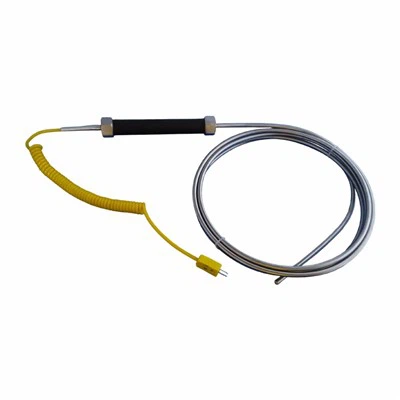
The repeatability of temperature measurement is a crucial factor in assessing the performance of a high - precision portable thermometer. As a supplier of high - precision portable thermometers, understanding and communicating this concept to our customers is of utmost importance.
Understanding Repeatability in Temperature Measurement
Repeatability in temperature measurement refers to the ability of a thermometer to provide consistent results when measuring the same temperature under the same conditions over multiple trials. In a high - precision portable thermometer, this means that if we measure the temperature of a stable heat source, such as a calibrated temperature bath, multiple times, the readings should be very close to each other.
The significance of repeatability cannot be overstated. In many industries, such as food processing, pharmaceuticals, and scientific research, accurate and consistent temperature measurements are essential. For example, in the food industry, maintaining a specific temperature during processing is crucial for food safety and quality. A thermometer with poor repeatability may give inconsistent readings, leading to incorrect temperature control and potentially unsafe products.
Factors Affecting the Repeatability of High - Precision Portable Thermometers
There are several factors that can affect the repeatability of a high - precision portable thermometer. One of the primary factors is the quality of the temperature sensor. High - quality sensors are more likely to provide consistent readings. For instance, thermocouples and resistance temperature detectors (RTDs) are commonly used in high - precision thermometers. Thermocouples work based on the Seebeck effect, where a voltage is generated due to a temperature difference between two junctions. RTDs, on the other hand, change their electrical resistance with temperature. The accuracy and stability of these sensors play a significant role in the repeatability of the thermometer.
Another factor is the calibration of the thermometer. Regular calibration ensures that the thermometer is providing accurate readings. If a thermometer is not calibrated correctly, it may give inconsistent results. Calibration involves comparing the thermometer's readings with a known standard. For example, a high - precision thermometer can be calibrated against a reference thermometer that has been certified by a national metrology institute.
The environment in which the thermometer is used also affects repeatability. Factors such as ambient temperature, humidity, and electromagnetic interference can influence the thermometer's performance. For example, if the thermometer is used in an environment with high electromagnetic interference, it may cause fluctuations in the readings.
Assessing the Repeatability of Our High - Precision Portable Thermometers
At our company, we take several steps to ensure the repeatability of our high - precision portable thermometers. First, we use high - quality temperature sensors in our products. Our sensors are carefully selected and tested to ensure their accuracy and stability. We also have a rigorous calibration process in place. Each thermometer is calibrated before it leaves our factory, and we provide calibration certificates to our customers.
To assess the repeatability of our thermometers, we conduct multiple tests. We measure the temperature of a stable heat source multiple times and calculate the standard deviation of the readings. A low standard deviation indicates high repeatability. For example, if we measure the temperature of a calibrated temperature bath ten times and the standard deviation of the readings is very small, it means that our thermometer is providing consistent results.
Applications of High - Precision Portable Thermometers with Good Repeatability
Our high - precision portable thermometers with good repeatability have a wide range of applications. In the metal industry, for example, Aluminum Molten Metal Thermometer and Copper Molten Metal Thermometer are used to measure the temperature of molten metals accurately. In this application, repeatability is crucial because even a small error in temperature measurement can lead to significant problems in the metal casting process.
In the medical field, our high - precision portable thermometers are used for patient temperature monitoring. A thermometer with good repeatability ensures that the patient's temperature is measured accurately, which is essential for proper diagnosis and treatment.
In the environmental monitoring field, our thermometers are used to measure the temperature of air, water, and soil. Consistent and accurate temperature measurements are necessary for understanding climate change and environmental trends.
Advantages of Our High - Precision Portable Thermometers
Our high - precision portable thermometers offer several advantages. Firstly, their high repeatability ensures reliable and consistent temperature measurements. This is particularly important in applications where accuracy is critical. Secondly, our thermometers are portable, which means they can be easily carried to different locations for temperature measurement. This is useful in industries such as field research and on - site inspections.
Our thermometers are also user - friendly. They have clear displays and simple operation procedures, making them easy to use for both professionals and non - professionals. Additionally, our products are designed to be durable and resistant to harsh environments. This ensures that they can be used in a variety of conditions without compromising their performance.


Contact Us for Procurement
If you are in need of high - precision portable thermometers, we invite you to explore our range of products at High - precision Portable Thermometer. Our team of experts is ready to assist you in selecting the right thermometer for your specific needs. Whether you are in the metal industry, medical field, or environmental monitoring, we have the solution for you. Contact us to start a procurement discussion and experience the benefits of our high - quality thermometers.
References
- ASTM E220 - 18, Standard Test Method for Calibration of Thermocouples by Comparison Techniques.
- ISO 9001:2015, Quality management systems — Requirements.
- NIST Handbook 44, Specifications, Tolerances, and Other Technical Requirements for Weighing and Measuring Devices.