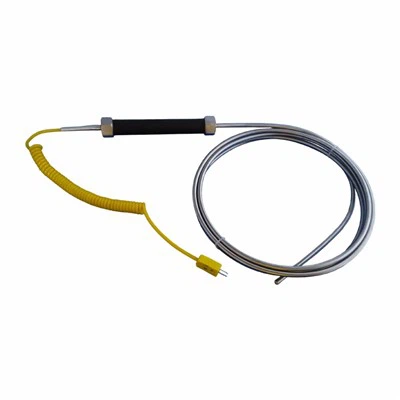
Radial thermometers are essential tools in various industries for accurately measuring temperature. As a leading supplier of radial thermometers, we understand the diverse needs of our customers and offer a wide range of options to meet those requirements. In this blog, we will explore the different types of radial thermometers available in the market.
Bimetallic Radial Thermometers
Bimetallic radial thermometers are one of the most common types. They operate on the principle of thermal expansion. A bimetallic strip, made up of two different metals with different coefficients of thermal expansion, is used. When the temperature changes, the strip bends due to the unequal expansion of the two metals. This bending is then translated into a temperature reading on the dial.
These thermometers are known for their simplicity, reliability, and cost - effectiveness. They are suitable for a wide range of applications, including industrial processes, HVAC systems, and food storage. Our Shock - resistant Bimetallic Thermometer is a great example of this type. It is designed to withstand shocks and vibrations, making it ideal for harsh industrial environments. The shock - resistant feature ensures that the thermometer maintains its accuracy even in rough conditions.
Digital Radial Thermometers
Digital radial thermometers offer a more advanced and precise way of measuring temperature. They use electronic sensors, such as thermistors or thermocouples, to detect temperature changes. The sensor converts the temperature into an electrical signal, which is then processed and displayed as a digital reading on the screen.
One of the main advantages of digital radial thermometers is their high accuracy. They can provide readings with a high degree of precision, often up to one - tenth of a degree Celsius or Fahrenheit. They also offer additional features such as data logging, which allows users to record temperature readings over time. This is particularly useful in applications where temperature monitoring is critical, such as in scientific research or medical settings.
304 Stainless Steel Bimetallic Thermometers
304 stainless steel bimetallic thermometers are a specialized type of bimetallic thermometer. The use of 304 stainless steel in the construction of these thermometers makes them highly resistant to corrosion. This makes them suitable for use in environments where there is exposure to moisture, chemicals, or other corrosive substances.
Our 304 Stainless Steel Bimetallic Thermometer is designed with a durable 304 stainless steel housing, which not only protects the internal components but also gives it a long lifespan. These thermometers are commonly used in industries such as food processing, chemical manufacturing, and marine applications.
Industrial Radial Thermometers
Industrial radial thermometers are designed to meet the demanding requirements of industrial applications. They are built to withstand high temperatures, pressure, and harsh environmental conditions. These thermometers often have a larger dial size for easy reading and are available in different ranges to suit various industrial processes.
For example, in the oil and gas industry, industrial radial thermometers are used to monitor the temperature of pipelines, storage tanks, and processing equipment. They need to be accurate and reliable to ensure the safe and efficient operation of the facilities. Our Radial Thermometer is a high - quality option for industrial applications. It is designed with robust construction and advanced features to meet the needs of industrial users.
Food - Grade Radial Thermometers
Food - grade radial thermometers are specifically designed for use in the food industry. They are made from materials that are safe for contact with food and are designed to meet strict hygiene standards. These thermometers are used to measure the temperature of food products during various stages of production, storage, and transportation.
Food - grade radial thermometers typically have a quick - response time, which allows for accurate and timely temperature measurements. They also often have a probe that is easy to clean and sanitize to prevent the growth of bacteria and other contaminants.


Medical Radial Thermometers
In the medical field, radial thermometers are used for measuring body temperature. They are designed to be accurate, reliable, and easy to use. Medical radial thermometers often use digital technology to provide fast and accurate readings.
Some medical radial thermometers are designed for oral use, while others can be used under the armpit or in the ear. They are an essential tool in healthcare settings, helping doctors and nurses to monitor the health of patients.
Considerations When Choosing a Radial Thermometer
When choosing a radial thermometer, there are several factors to consider. The first is the temperature range. Different applications require different temperature ranges, so it is important to choose a thermometer that can measure the temperatures within the range needed for your specific application.
Accuracy is another important factor. For applications where precise temperature measurements are critical, such as in scientific research or medical settings, a high - accuracy thermometer is required.
The environment in which the thermometer will be used is also a consideration. If the thermometer will be exposed to harsh conditions, such as high temperatures, pressure, or corrosive substances, a thermometer with a robust construction and appropriate materials should be chosen.
Ease of use is also important. A thermometer that is easy to read and operate will save time and reduce the risk of errors.
Conclusion
As a supplier of radial thermometers, we offer a wide range of options to meet the diverse needs of our customers. Whether you need a bimetallic thermometer for general industrial use, a digital thermometer for high - precision measurements, or a food - grade thermometer for the food industry, we have the right solution for you.
If you are interested in purchasing radial thermometers for your business or project, we invite you to contact us for more information and to discuss your specific requirements. Our team of experts is ready to assist you in choosing the best thermometer for your needs.
References
- "Temperature Measurement Basics" - Instrumentation and Control Systems Handbook
- "Industrial Thermometry" - Journal of Industrial Engineering