What is the hysteresis of a radial thermometer?
As a trusted supplier of radial thermometers, I often encounter customers who are curious about various technical aspects of these instruments. One such important concept is the hysteresis of a radial thermometer. In this blog post, I'll delve into what hysteresis means in the context of radial thermometers, its implications, and how it relates to the performance of the products we offer.
Understanding Hysteresis
Hysteresis in a radial thermometer refers to the phenomenon where the thermometer's reading does not return to the exact same value when the temperature is cycled up and then back down. In other words, there is a difference in the thermometer's response depending on whether the temperature is increasing or decreasing. This is due to the physical properties of the materials used in the thermometer's sensing element.
For example, in a bimetallic radial thermometer, the sensing element is typically made of two different metals bonded together. As the temperature changes, the two metals expand or contract at different rates, causing the bimetallic strip to bend. However, the mechanical behavior of the bimetallic strip is not perfectly reversible. When the temperature increases, the strip bends in one direction, and when the temperature decreases, it bends back, but not necessarily to the exact same position as before. This results in a difference in the thermometer's reading, which is the hysteresis.
Causes of Hysteresis
There are several factors that can contribute to hysteresis in a radial thermometer. One of the main causes is the mechanical properties of the sensing element. As mentioned earlier, the bimetallic strip in a bimetallic thermometer has a certain degree of elasticity and plasticity. When the temperature changes, the strip undergoes deformation, and some of this deformation may be permanent. This can lead to a difference in the strip's position and, consequently, the thermometer's reading.
Another factor is the friction within the thermometer's movement. The pointer of the thermometer is connected to the sensing element through a mechanical linkage. As the sensing element moves, there is friction between the different parts of the linkage, which can cause the pointer to lag behind or not return to its original position exactly.
In addition, environmental factors such as temperature variations, humidity, and vibration can also affect the hysteresis of a radial thermometer. For example, high humidity can cause corrosion of the sensing element, which can alter its mechanical properties and increase hysteresis.

Implications of Hysteresis
Hysteresis can have several implications for the accuracy and reliability of a radial thermometer. In applications where precise temperature measurements are required, such as in scientific research or industrial processes, hysteresis can introduce errors in the readings. This can lead to incorrect decisions being made based on the temperature data, which can have serious consequences.
For example, in a chemical process where the temperature needs to be controlled within a narrow range, hysteresis in the thermometer can cause the temperature to be over- or under-controlled. This can affect the quality of the product being produced and may even lead to safety hazards.
However, it's important to note that hysteresis is a normal characteristic of most thermometers, and it can be minimized through proper design and manufacturing processes. At our company, we take great care to ensure that our radial thermometers have low hysteresis values. We use high-quality materials for the sensing elements and employ advanced manufacturing techniques to reduce friction and improve the mechanical stability of the thermometers.
Our Radial Thermometer Products
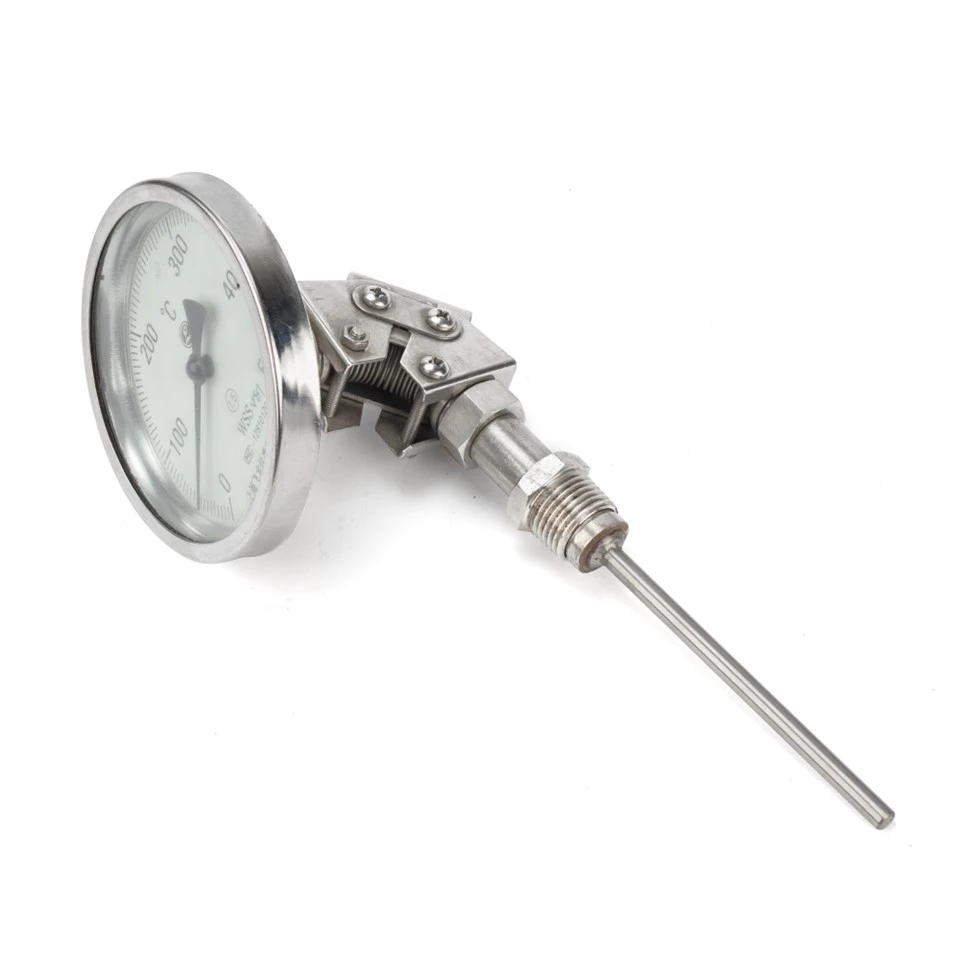
We offer a wide range of radial thermometers to meet the diverse needs of our customers. Our Shock-resistant Bimetallic Thermometer is designed to withstand harsh environments and vibrations. It features a rugged construction and a shock-resistant case, making it suitable for use in industrial applications where reliability is crucial.
Our Axial Flexible Tube Thermometer is another popular product. It has a flexible tube that allows for easy installation in hard-to-reach places. The thermometer is highly accurate and has low hysteresis, ensuring reliable temperature measurements.
For more general-purpose applications, we have the Universal Bimetallic Thermometer. This thermometer is suitable for a wide range of temperatures and can be used in various industries, including food processing, HVAC, and automotive.
Minimizing Hysteresis in Our Products
To minimize hysteresis in our radial thermometers, we follow a strict quality control process. We carefully select the materials for the sensing elements to ensure their mechanical stability and low hysteresis characteristics. We also conduct extensive testing on each thermometer to ensure that it meets our high standards of accuracy and reliability.
In addition, we provide our customers with detailed instructions on how to use and maintain the thermometers to minimize hysteresis. For example, we recommend that the thermometers be installed in a stable environment away from sources of vibration and temperature fluctuations. We also advise regular calibration to ensure the accuracy of the readings.
Conclusion
In conclusion, hysteresis is an important concept to understand when it comes to radial thermometers. It can affect the accuracy and reliability of the temperature measurements, but it can be minimized through proper design, manufacturing, and maintenance. At our company, we are committed to providing high-quality radial thermometers with low hysteresis values to meet the needs of our customers.
If you are in the market for a radial thermometer, we invite you to explore our range of products. Our team of experts is available to assist you in selecting the right thermometer for your application and to answer any questions you may have. Contact us today to start the procurement process and discuss your specific requirements.
References
- Hall, P. H. (1992). Temperature Measurement. CRC Press.
- Wills, R. H. (2008). Handbook of Temperature Measurement. Newnes.