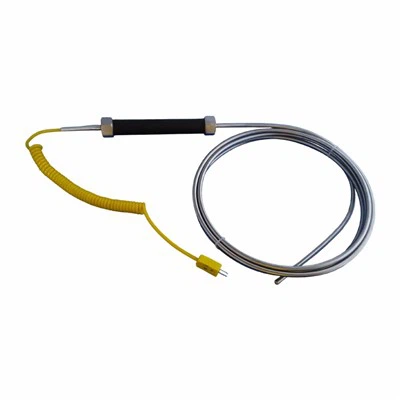
In the field of industrial temperature measurement, especially in hazardous environments where flammable gases, vapors, or dust are present, the selection of thermocouples is of utmost importance. Two commonly used types of explosion - proof thermocouples are intrinsic safety thermocouples and flameproof explosion - proof thermocouples. As a reliable Explosion - proof Thermocouple [/thermocouple/thermocouples/explosion - proof - thermocouple.html] supplier, I will delve into the differences between these two types to help you make an informed decision.
1. Basic Concepts
Intrinsic Safety Thermocouples
Intrinsic safety is a protection technique where the energy in the circuit is limited to a level that is insufficient to cause ignition of a hazardous atmosphere. An intrinsic safety thermocouple is designed to prevent the release of enough energy to ignite a flammable mixture. It achieves this by using special barriers and limiting the electrical energy in the circuit. These barriers are typically installed in a safe area and restrict the amount of current and voltage that can reach the thermocouple in the hazardous area.
Flameproof Explosion - Proof Thermocouples
Flameproof explosion - proof thermocouples rely on a robust enclosure to contain any explosion that might occur inside the thermocouple. The enclosure is designed to withstand the pressure of an internal explosion without allowing the flame or hot gases to escape and ignite the surrounding hazardous atmosphere. The enclosure is usually made of thick - walled metal or other suitable materials, and it has precise dimensions and construction to ensure its effectiveness.
2. Design and Construction
Intrinsic Safety Thermocouples
The design of intrinsic safety thermocouples focuses on energy limitation. They are often used in combination with intrinsic safety barriers, which are installed in a non - hazardous area. The thermocouple itself is relatively simple in construction, but the associated electrical circuit is carefully engineered to limit the power. The cables used for intrinsic safety thermocouples are also designed to minimize energy transfer. For example, they may have low capacitance and inductance values to reduce the stored energy in the circuit.
Flameproof Explosion - Proof Thermocouples
Flameproof thermocouples have a more complex mechanical design. The enclosure is the key component. It must be able to withstand the pressure generated by an internal explosion. The enclosure is usually made of cast iron, stainless steel, or other strong materials. The joints and connections in the enclosure are carefully designed to prevent the passage of flames. Additionally, the thermocouple elements inside the enclosure are protected from the harsh environment and potential explosive events.
3. Safety Mechanisms
Intrinsic Safety Thermocouples
The safety mechanism of intrinsic safety thermocouples is based on energy limitation. By limiting the electrical energy in the circuit, the risk of ignition is minimized. Even if there is a short - circuit or other electrical fault in the thermocouple, the energy released is not enough to ignite the surrounding flammable atmosphere. This makes intrinsic safety thermocouples suitable for applications where the risk of explosion is relatively high and where strict safety standards need to be met.
Flameproof Explosion - Proof Thermocouples
Flameproof thermocouples rely on the physical containment of an explosion. If an explosion occurs inside the enclosure, the enclosure will prevent the flames and hot gases from escaping. The design of the enclosure is such that it can withstand the pressure of the explosion and cool the hot gases before they can reach the outside environment. This ensures that the surrounding hazardous atmosphere is not ignited.
4. Installation and Maintenance
Intrinsic Safety Thermocouples
Installation of intrinsic safety thermocouples requires careful attention to the electrical circuit. The intrinsic safety barriers must be installed in a non - hazardous area, and the wiring between the thermocouple and the barrier must be properly configured. Maintenance is relatively straightforward, as the thermocouple itself is a simple device. However, the intrinsic safety barriers need to be regularly checked to ensure their proper functioning.
Flameproof Explosion - Proof Thermocouples
Installation of flameproof thermocouples involves the proper installation of the enclosure. The enclosure must be correctly mounted and sealed to ensure its effectiveness. Maintenance of flameproof thermocouples is more complex. The enclosure needs to be inspected regularly for any signs of damage or wear. The thermocouple elements inside the enclosure also need to be checked for proper operation.
5. Applications
Intrinsic Safety Thermocouples
Intrinsic safety thermocouples are commonly used in applications where the hazardous area is large and where it is difficult to install a flameproof enclosure. They are also suitable for applications where the risk of explosion is high, such as in the chemical and petrochemical industries. For example, in a chemical plant where flammable gases are present, intrinsic safety thermocouples can be used to measure the temperature of various processes without the need for a large and bulky flameproof enclosure.
Flameproof Explosion - Proof Thermocouples
Flameproof explosion - proof thermocouples are often used in applications where the hazardous area is relatively small and where a robust enclosure can be easily installed. They are commonly used in industries such as mining, oil and gas, and power generation. For instance, in a coal mine where there is a risk of methane explosion, flameproof thermocouples can be used to monitor the temperature of equipment and processes.


6. Cost Considerations
Intrinsic Safety Thermocouples
The cost of intrinsic safety thermocouples includes the cost of the thermocouple itself and the associated intrinsic safety barriers. The barriers can be relatively expensive, especially for high - performance models. However, the overall cost may be lower in applications where a large number of thermocouples are required, as the installation and maintenance costs are relatively low.
Flameproof Explosion - Proof Thermocouples
Flameproof explosion - proof thermocouples are generally more expensive due to the cost of the robust enclosure. The installation and maintenance costs are also higher, as the enclosure needs to be regularly inspected and maintained. However, in applications where a high level of protection is required, the cost may be justified.
7. Compatibility with Other Devices
Intrinsic Safety Thermocouples
Intrinsic safety thermocouples are often used in conjunction with other intrinsically safe devices. They are compatible with a wide range of control systems and monitoring equipment, as long as the overall system is designed to meet the intrinsic safety requirements. For example, they can be easily integrated with data loggers and control panels in a hazardous environment.
Flameproof Explosion - Proof Thermocouples
Flameproof thermocouples can be used with a variety of devices, but the installation may be more complex due to the need for a flameproof enclosure. They are compatible with most industrial control systems, but the enclosure may need to be modified to accommodate the connection of other devices.
8. Environmental Considerations
Intrinsic Safety Thermocouples
Intrinsic safety thermocouples are suitable for a wide range of environmental conditions. They can be used in areas with high humidity, dust, and corrosive substances. However, the intrinsic safety barriers need to be protected from the environment to ensure their proper functioning.
Flameproof Explosion - Proof Thermocouples
Flameproof thermocouples are designed to withstand harsh environmental conditions. The enclosure provides protection against dust, moisture, and mechanical damage. They are suitable for use in outdoor and industrial environments where the thermocouple may be exposed to various elements.
Conclusion
In conclusion, both intrinsic safety and flameproof explosion - proof thermocouples have their own advantages and disadvantages. The choice between the two depends on various factors such as the nature of the hazardous environment, the application requirements, cost considerations, and installation and maintenance requirements. As an Explosion - proof Thermocouple [/thermocouple/thermocouples/explosion - proof - thermocouple.html] supplier, we can provide you with detailed information and guidance to help you select the most suitable thermocouple for your specific needs.
If you are interested in our products, including Surface Thermocouple [/thermocouple/thermocouples/surface - thermocouple.html] and Platinum - rhodium Thermocouples [/thermocouple/thermocouples/platinum - rhodium - thermocouples.html], or if you have any questions about explosion - proof thermocouples, please feel free to contact us for further discussion and procurement negotiation.
References
- Perry, R. H., & Green, D. W. (1997). Perry's Chemical Engineers' Handbook. McGraw - Hill.
- ANSI/ISA - 12.06.01 - 2015, Explosion - proof Electrical Equipment for Use in Class I, Division 1 Hazardous (Classified) Locations.
- IEC 60079 - 11:2011, Explosive atmospheres - Part 11: Equipment protection by intrinsic safety "i".