The study of surface thermal resistance is a crucial area in the field of heat transfer, with far - reaching implications for various industries such as electronics, aerospace, and energy. In this blog, as a Surface Thermal Resistance supplier, I will delve into how surface nanoscale structure affects surface thermal resistance, exploring the underlying mechanisms and practical applications.
Understanding Surface Thermal Resistance
Surface thermal resistance refers to the ability of a surface to impede the flow of heat. It is a key parameter in heat transfer analysis, influencing the efficiency of heat - exchanging systems. A high surface thermal resistance means that heat transfer across the surface is restricted, while a low surface thermal resistance allows for more efficient heat transfer. The Surface Thermal Resistance plays a vital role in determining the performance of many thermal management systems.
The Role of Nanoscale Structures
At the nanoscale, the surface structure can have a profound impact on surface thermal resistance. Nanoscale structures can be engineered to manipulate heat transfer at the surface. There are several ways in which nanoscale structures affect surface thermal resistance:
1. Increased Surface Area
Nanoscale structures, such as nanowires, nanotubes, or nanopillars, can significantly increase the surface area of a material. When the surface area is increased, the number of contact points for heat transfer also increases. However, this does not always lead to a decrease in thermal resistance. In some cases, the increased surface area can introduce more scattering sites for phonons (the carriers of heat in solids), which can actually increase the thermal resistance. For example, in a material with a dense array of nanowires, phonons may scatter more frequently at the nanowire - air interfaces, reducing the overall heat transfer efficiency.
2. Phonon Scattering
Phonons are the primary carriers of heat in non - metallic solids. Nanoscale structures can act as scattering centers for phonons. When phonons encounter a nanoscale feature, such as a step, a grain boundary, or a defect, they can change their direction or lose energy. This scattering effect can either increase or decrease the surface thermal resistance depending on the nature of the nanoscale structure. For instance, a well - ordered nanoscale structure may allow for more efficient phonon transport, while a disordered or rough nanoscale surface can cause significant phonon scattering and increase thermal resistance.
3. Interface Effects
Nanoscale structures can also affect the thermal resistance at interfaces. When two materials are in contact, the interface between them can introduce a thermal resistance due to differences in phonon spectra and bonding. Nanoscale structures at the interface can modify the interface properties. For example, a nanoscale layer of a different material can be used to improve the phonon coupling between two materials, reducing the interface thermal resistance. On the other hand, a rough or non - uniform nanoscale interface can increase the thermal resistance.
Examples of Nanoscale Structures and Their Impact on Thermal Resistance
Nanowires
Nanowires have been extensively studied for their potential to control surface thermal resistance. A single nanowire can have a very high thermal conductivity along its length due to the one - dimensional nature of phonon transport. However, when multiple nanowires are arranged in an array, the thermal resistance can be affected by the interactions between the nanowires. The spacing between the nanowires, their orientation, and the surface roughness of the nanowires all play a role in determining the overall surface thermal resistance.
Nanoporous Structures
Nanoporous materials, such as aerogels, have extremely low thermal conductivities. The nanopores in these materials act as barriers to phonon transport, increasing the surface thermal resistance. The size, shape, and distribution of the nanopores can be controlled during the fabrication process to optimize the thermal properties of the material. For example, smaller nanopores can lead to more phonon scattering and higher thermal resistance.
Nanocomposites
Nanocomposites are materials that consist of a matrix material with embedded nanoscale particles or fibers. The addition of nanoscale fillers can significantly affect the surface thermal resistance of the composite. For example, carbon nanotubes can be added to a polymer matrix to improve the thermal conductivity of the composite. However, the dispersion of the nanotubes and their interaction with the matrix material are critical factors in determining the overall thermal performance.
Practical Applications
The understanding of how surface nanoscale structure affects surface thermal resistance has numerous practical applications:
Electronics Cooling
In electronic devices, efficient heat dissipation is crucial for maintaining the performance and reliability of the components. By engineering the surface nanoscale structure of heat sinks or electronic packages, the surface thermal resistance can be reduced, allowing for more efficient heat transfer. For example, nanoscale fins or microchannels can be fabricated on the surface of a heat sink to increase the surface area and enhance heat transfer.


Aerospace Industry
In the aerospace industry, thermal management is essential for the safety and performance of aircraft and spacecraft. Nanoscale structures can be used to improve the thermal insulation of components or to enhance the heat transfer in cooling systems. For example, nanocomposite materials with low thermal conductivity can be used as thermal shields, while nanoscale heat exchangers can be developed to improve the efficiency of cooling systems.
Energy Storage
In energy storage systems, such as batteries and fuel cells, thermal management is important for maintaining the performance and lifespan of the devices. By controlling the surface thermal resistance of the electrodes or the housing of the energy storage system, the heat generated during operation can be dissipated more effectively. Nanoscale structures can be used to enhance the heat transfer between the electrodes and the cooling medium, improving the overall efficiency of the energy storage system.
Our Products and Solutions
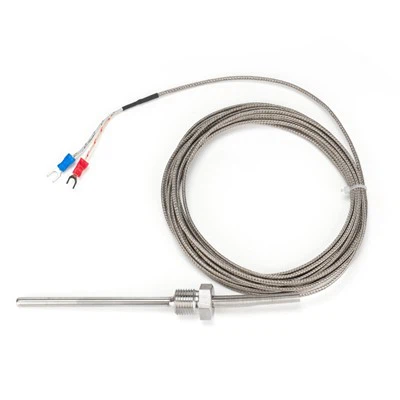
As a Surface Thermal Resistance supplier, we offer a range of products and solutions to meet the diverse needs of our customers. Our Explosion - proof RTD and Prefabricated RTD are designed to provide accurate temperature measurements in various applications. These products are engineered with advanced nanoscale structures to optimize the surface thermal resistance and ensure reliable performance.
If you are interested in our products or have any questions about surface thermal resistance, we encourage you to contact us for a detailed discussion. We can provide customized solutions based on your specific requirements and help you achieve the best thermal management performance.
Conclusion
The surface nanoscale structure has a significant impact on surface thermal resistance. By understanding the underlying mechanisms and engineering the nanoscale structure, we can control the heat transfer at the surface and optimize the thermal performance of various materials and systems. As a Surface Thermal Resistance supplier, we are committed to providing high - quality products and solutions that leverage the latest advancements in nanotechnology to meet the evolving needs of our customers. If you are looking for reliable surface thermal resistance solutions, please feel free to reach out to us for procurement and further discussion.
References
- Cahill, D. G., Ford, W. K., Goodson, K. E., Mahan, G. D., Majumdar, A., Maris, H. J., … & Zeller, R. C. (2003). Nanoscale thermal transport. Journal of Applied Physics, 93(2), 793 - 818.
- Chen, G. (2005). Nanoscale energy transport and conversion: A parallel treatment of electrons, molecules, phonons, and photons. Oxford University Press.
- Huxtable, S. T., Hellman, F., Majumdar, A., & Maris, H. J. (2003). Thermal conductivity of individual silicon nanowires. Applied Physics Letters, 83(23), 4897 - 4899.