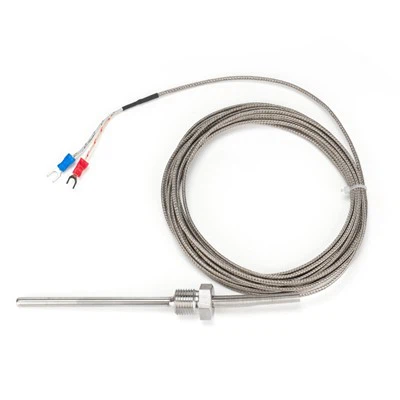
As a provider of smart thermometers, I am often asked about how these innovative devices work. Smart thermometers have revolutionized the way we measure and monitor temperature, offering precision, convenience, and connectivity like never before. In this blog post, I will delve into the inner workings of smart thermometers, exploring the technology behind them and how they can benefit various industries and applications.
The Basics of Temperature Measurement
Before we dive into the specifics of smart thermometers, let's first understand the basics of temperature measurement. Temperature is a measure of the average kinetic energy of the particles in a substance. There are several scales used to measure temperature, including Celsius, Fahrenheit, and Kelvin. In most cases, smart thermometers are designed to measure temperature in Celsius or Fahrenheit, depending on the user's preference.
The most common method of temperature measurement is through the use of a temperature sensor. These sensors are typically made of materials that change their electrical properties in response to changes in temperature. The two most common types of temperature sensors used in smart thermometers are thermistors and thermocouples.
- Thermistors: Thermistors are semiconductor devices that change their resistance in response to changes in temperature. They are highly sensitive and can provide accurate temperature measurements over a wide range of temperatures. Thermistors are commonly used in consumer-grade smart thermometers due to their low cost and ease of use.
- Thermocouples: Thermocouples are made of two different metals joined together at one end. When the junction of the two metals is exposed to a temperature difference, a voltage is generated. This voltage is proportional to the temperature difference between the junction and the other end of the thermocouple. Thermocouples are more accurate than thermistors and can measure higher temperatures, making them suitable for industrial applications.
How Smart Thermometers Work
Smart thermometers take temperature measurement to the next level by incorporating advanced technology and connectivity features. These devices typically consist of a temperature sensor, a microcontroller, and a communication module.


- Temperature Sensor: As mentioned earlier, the temperature sensor is responsible for measuring the temperature. It converts the temperature into an electrical signal that can be processed by the microcontroller.
- Microcontroller: The microcontroller is the brain of the smart thermometer. It processes the electrical signal from the temperature sensor and performs calculations to determine the temperature. It also controls the other components of the smart thermometer, such as the display and the communication module.
- Communication Module: The communication module allows the smart thermometer to connect to other devices, such as smartphones, tablets, or computers. This enables users to monitor and control the temperature remotely, as well as receive alerts and notifications.
Smart thermometers can communicate with other devices using a variety of wireless protocols, such as Bluetooth, Wi-Fi, and Zigbee. Bluetooth is the most common protocol used in consumer-grade smart thermometers, as it is easy to use and widely supported by smartphones and other devices. Wi-Fi is typically used in industrial applications, as it provides a more stable and reliable connection. Zigbee is a low-power wireless protocol that is commonly used in home automation systems.
Applications of Smart Thermometers
Smart thermometers have a wide range of applications in various industries, including healthcare, food safety, and environmental monitoring.
- Healthcare: In the healthcare industry, smart thermometers are used to monitor the body temperature of patients. They can provide accurate and real-time temperature readings, which can help doctors and nurses diagnose and treat illnesses more effectively. Smart thermometers can also be used to monitor the temperature of vaccines and other medical supplies, ensuring that they are stored at the correct temperature.
- Food Safety: In the food industry, smart thermometers are used to monitor the temperature of food during storage, transportation, and preparation. They can help prevent foodborne illnesses by ensuring that food is stored and cooked at the correct temperature. Smart thermometers can also be used to monitor the temperature of refrigerators and freezers, ensuring that they are operating at the correct temperature.
- Environmental Monitoring: In the environmental monitoring industry, smart thermometers are used to monitor the temperature of the air, water, and soil. They can help scientists and researchers understand the impact of climate change on the environment, as well as monitor the temperature of industrial processes and equipment.
Our Smart Thermometer Products
As a leading provider of smart thermometers, we offer a wide range of products to meet the needs of different industries and applications. Our products include Portable Temperature Gauge, Intelligent Temperature Control Instrument, and Digital Wired Thermostat.
- Portable Temperature Gauge: Our portable temperature gauge is a compact and easy-to-use device that can be used to measure the temperature of various substances, including liquids, gases, and solids. It features a large LCD display and can be connected to a smartphone or tablet via Bluetooth for remote monitoring and control.
- Intelligent Temperature Control Instrument: Our intelligent temperature control instrument is a high-precision device that can be used to control the temperature of industrial processes and equipment. It features a touchscreen display and can be programmed to maintain a specific temperature range. It can also be connected to a computer or other device via Wi-Fi for remote monitoring and control.
- Digital Wired Thermostat: Our digital wired thermostat is a reliable and easy-to-use device that can be used to control the temperature of homes and offices. It features a large LCD display and can be programmed to maintain a specific temperature range. It can also be connected to a smartphone or tablet via Wi-Fi for remote monitoring and control.
Contact Us for Procurement
If you are interested in purchasing our smart thermometer products, please contact us for more information. Our team of experts will be happy to assist you in selecting the right product for your needs and provide you with a competitive quote. We look forward to working with you and helping you improve your temperature monitoring and control capabilities.
References
- "Temperature Measurement Basics." Omega Engineering.
- "Smart Thermometers: How They Work and Why You Need One." Healthline.
- "The Future of Temperature Monitoring: Smart Thermometers." IoT For All.