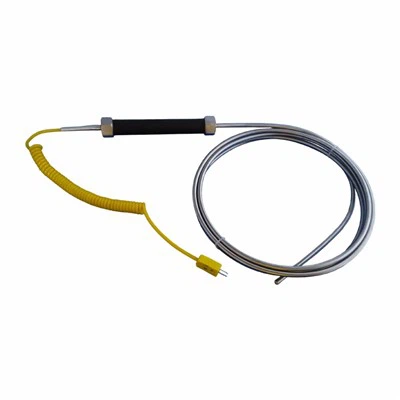
Hey there! As a supplier of Radial Thermometer, I often get asked whether our radial thermometers can be used in high-altitude areas. It's a great question, and today, I'm gonna break it down for you.


First off, let's talk about what makes a high-altitude area different from your regular lowlands. High-altitude areas typically have lower air pressure, thinner air, and extreme temperature variations. These factors can have a significant impact on how thermometers work.
One of the main concerns when using a thermometer in high-altitude areas is the effect of low air pressure. You see, the air pressure decreases as you go higher up. And this decrease can affect the performance of some types of thermometers. But here's the good news: our radial thermometers are designed to handle these conditions pretty well.
Our Radial Thermometer uses a bimetallic strip as the sensing element. This bimetallic strip is made up of two different metals with different coefficients of thermal expansion. When the temperature changes, the strip bends, and this bending is translated into a temperature reading on the dial. The beauty of this design is that it's not really affected by air pressure. So, even in high-altitude areas with low air pressure, our radial thermometer can still give you an accurate reading.
Another factor to consider is the extreme temperature variations in high-altitude areas. During the day, it can get quite hot, especially when the sun is shining directly. But at night, the temperature can drop significantly. Our radial thermometers are built to withstand these temperature swings. They have a wide temperature range, which means they can accurately measure both high and low temperatures. Whether it's a scorching day or a freezing night in the high mountains, our thermometer will keep on working.
Now, let's compare our radial thermometer with some other types of thermometers. For example, the Universal Bimetallic Thermometer and the Axial Flexible Tube Thermometer. While these thermometers are also great for various applications, the radial thermometer has some unique advantages when it comes to high-altitude use.
The radial thermometer has a compact and sturdy design, which makes it easy to carry around in high-altitude environments. You can take it with you on hikes, mountaineering trips, or any other outdoor activities in high places. And because it's not affected by air pressure, you don't have to worry about inaccurate readings due to the low pressure at high altitudes.
On the other hand, some other types of thermometers might have issues with air pressure or might not be as durable in extreme conditions. For instance, a liquid-in-glass thermometer can be easily broken in the rugged high-altitude terrain. And some electronic thermometers might have problems with the low air pressure affecting their sensors.
But our radial thermometer is built to last. It's made from high-quality materials that can withstand the harsh conditions of high-altitude areas. The bimetallic strip is protected by a tough outer casing, which shields it from dust, moisture, and physical damage. So, you can rely on it to give you accurate temperature readings, no matter where you are.
In addition to its performance in high-altitude areas, our radial thermometer is also very easy to use. You don't need any special training or technical knowledge to operate it. Just place it in the area where you want to measure the temperature, and you'll get an instant reading on the dial. It's that simple!
Now, if you're in the market for a reliable thermometer for high-altitude use, I highly recommend our Radial Thermometer. Whether you're a professional mountaineer, a scientist doing research in high places, or just an outdoor enthusiast who loves to explore the mountains, our thermometer will be a great addition to your gear.
If you're interested in purchasing our radial thermometers, we'd love to hear from you. We offer a wide range of models to suit different needs and budgets. And we can also provide you with technical support and advice to ensure that you get the most out of your thermometer. So, don't hesitate to reach out to us for more information and to start a purchase negotiation.
In conclusion, yes, our radial thermometer can definitely be used in high-altitude areas. Its design and construction make it suitable for the unique conditions found in these areas. So, if you're looking for a reliable and accurate thermometer for high-altitude use, look no further than our Radial Thermometer.
References:
- Principles of Bimetallic Thermometers.
- Effects of High Altitude on Temperature Measurement Devices.