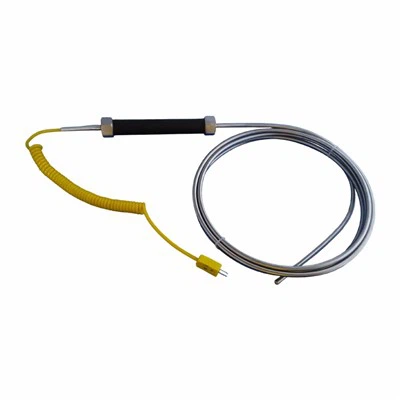
Hey there! As a supplier of bimetallic thermometers, I've been getting a lot of questions lately about whether these thermometers are suitable for the food industry. Well, let's dive right in and explore this topic together.
First off, what exactly is a bimetallic thermometer? Simply put, it's a device that measures temperature based on the principle of thermal expansion. It consists of two different metals bonded together. When the temperature changes, these metals expand or contract at different rates, causing the strip to bend. This bending is then translated into a temperature reading on a scale.
Now, let's talk about why bimetallic thermometers might be a good fit for the food industry. One of the biggest advantages is their reliability. These thermometers are known for their durability and long - lasting performance. They can withstand a fair amount of wear and tear, which is crucial in a busy food processing environment. Whether it's in a commercial kitchen, a food manufacturing plant, or a cold storage facility, bimetallic thermometers can keep on ticking.
Another great thing about them is their accuracy. In the food industry, accurate temperature measurement is of utmost importance. From ensuring that food is cooked to the right temperature to maintaining proper storage conditions, every degree matters. Bimetallic thermometers can provide fairly accurate readings within a reasonable range, which helps in meeting food safety standards.
Cost - effectiveness is also a major plus. Compared to some high - tech digital thermometers, bimetallic thermometers are relatively inexpensive. This makes them a great option for small and medium - sized food businesses that are looking to keep their costs down without sacrificing quality.
But it's not all sunshine and rainbows. There are some limitations to using bimetallic thermometers in the food industry. One of the main drawbacks is the response time. They may not be as quick to register temperature changes as some digital thermometers. In a fast - paced kitchen environment, this could be a bit of an issue, especially when you need to get an instant reading.
Also, bimetallic thermometers usually have a limited temperature range. If you're dealing with extremely high or low temperatures, they might not be the best choice. For example, in some industrial food processing where very high temperatures are involved, a different type of thermometer might be more suitable.
Now, let's take a look at some of the specific products we offer. We have the Bimetallic Thermometer with Electrical Contact. This thermometer is great for applications where you need to monitor temperature and also have an electrical signal for control purposes. It can be used in food storage units to ensure that the temperature stays within a certain range.
Our 304 Stainless Steel Bimetallic Thermometer is another popular option. The 304 stainless steel construction makes it resistant to corrosion, which is essential in a food - related environment where there might be exposure to moisture and various food substances.
And then there's the Radial Flexible Tube Thermometer. This thermometer is great for hard - to - reach places. In a large food storage facility, you might need to measure the temperature in tight corners or behind equipment, and this flexible tube design allows you to do just that.


So, are bimetallic thermometers suitable for the food industry? The answer is yes, but with some caveats. They are a reliable, cost - effective option for many food - related applications, but you need to consider the specific requirements of your operation. If you need quick response times or have to deal with extreme temperatures, you might want to look into other options as well.
If you're in the food industry and are thinking about using bimetallic thermometers, I'd love to have a chat with you. We can discuss your specific needs and see which of our products would be the best fit for your business. Whether you're a small local bakery or a large - scale food manufacturer, we've got the expertise and the products to help you keep your food at the right temperature.
References:
- "Thermometry in the Food Industry" - A comprehensive guide on temperature measurement in food processing.
- "Bimetallic Thermometer Technology" - An in - depth look at the principles and applications of bimetallic thermometers.