Hey there! I'm a supplier of bimetallic thermometers, and today I want to dive into a comparison between bimetallic thermometers and thermocouples. Both of these temperature - measuring devices have their own unique features, and understanding their differences can help you make the right choice for your specific needs.
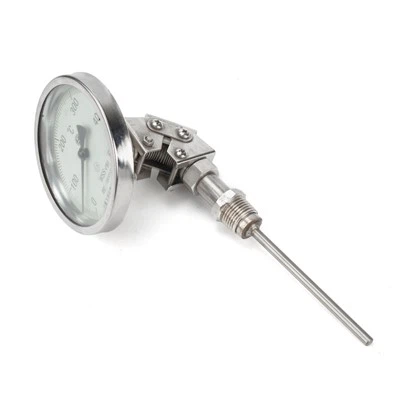
Let's start with the basics. A bimetallic thermometer works on a simple principle. It consists of two different metals bonded together. When the temperature changes, these two metals expand at different rates, causing the strip to bend. This bending is then translated into a temperature reading on a dial. It's a pretty straightforward and reliable way to measure temperature.
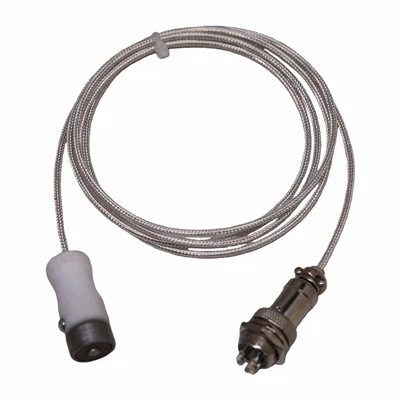
On the other hand, a thermocouple is based on the Seebeck effect. It's made up of two different metal wires joined at one end. When there's a temperature difference between the junction and the other ends of the wires, a voltage is generated. This voltage can be measured and converted into a temperature value.
Accuracy
Accuracy is a key factor when it comes to temperature measurement. Bimetallic thermometers are generally accurate within a certain range. They're great for most general applications where you don't need extremely precise readings. For example, in a home environment, a bimetallic thermometer can give you a good idea of the room temperature. However, their accuracy can be affected by factors like mechanical wear and tear over time.
Thermocouples, on the other hand, can offer higher accuracy, especially in more demanding industrial applications. They can measure a wide range of temperatures, from very low to extremely high. But they also require more complex calibration and signal processing to ensure accurate readings. So, if you need high - precision temperature measurement, a thermocouple might be the better choice.
Response Time
Response time is another important aspect. Bimetallic thermometers have a relatively slow response time. The bending of the bimetallic strip takes some time as it reacts to the temperature change. This means that if you need to measure rapid temperature changes, a bimetallic thermometer might not be the best option.
Thermocouples, in contrast, have a much faster response time. They can quickly detect changes in temperature because the voltage generation is almost instantaneous. This makes them ideal for applications where you need to monitor rapid temperature fluctuations, like in a chemical reaction or a high - speed manufacturing process.
Durability
When it comes to durability, bimetallic thermometers are quite robust. They're simple in design and don't have many delicate components. They can withstand normal wear and tear, and they're not easily damaged by shock or vibration. This makes them suitable for use in harsh environments, such as in factories or outdoor settings.


Thermocouples, while also durable, are more sensitive to certain factors. The metal wires can be damaged by corrosion, especially in corrosive environments. Also, the connections between the wires need to be carefully maintained to ensure accurate readings. So, in a very harsh and corrosive environment, a bimetallic thermometer might be a more reliable option.
Cost
Cost is always a consideration. Bimetallic thermometers are generally more affordable. They're simple to manufacture, and the materials used are relatively inexpensive. This makes them a great choice for budget - conscious customers.
Thermocouples, on the other hand, can be more expensive. The materials used in thermocouples, especially the high - quality metals, can add to the cost. Also, the additional equipment needed for signal processing and calibration can increase the overall cost. So, if you're on a tight budget, a bimetallic thermometer might be the way to go.
Applications
Bimetallic thermometers are widely used in many everyday applications. You can find them in ovens, refrigerators, and HVAC systems. They're also commonly used in industrial settings for general temperature monitoring. For example, in a food processing plant, a bimetallic thermometer can be used to monitor the temperature of the cooking equipment.
Thermocouples are more commonly used in industrial applications where high - precision temperature measurement is required. They're used in power plants, chemical industries, and metal processing. For instance, in a steel mill, thermocouples are used to measure the temperature of the molten metal, which is crucial for the quality of the final product.
Our Bimetallic Thermometer Offerings
As a bimetallic thermometer supplier, I'm proud to offer a wide range of products. We have Axial Thermometer, which is designed for applications where space is limited. Its axial design allows for easy installation in tight spaces.
Our Radial Thermometer is great for applications where you need a clear view of the temperature reading from different angles. It has a radial scale that makes it easy to read the temperature, even from a distance.
And if you need a bimetallic thermometer with additional functionality, we also offer Bimetallic Thermometer with Electrical Contact. This type of thermometer can be used to trigger an electrical signal when a certain temperature is reached, which is useful for automated control systems.
Conclusion
In conclusion, both bimetallic thermometers and thermocouples have their own advantages and disadvantages. Bimetallic thermometers are simple, affordable, and durable, making them a great choice for general temperature measurement. Thermocouples, on the other hand, offer higher accuracy and faster response times, which are essential for more demanding applications.
If you're in the market for a temperature - measuring device, I encourage you to consider your specific needs and requirements. Whether you need a bimetallic thermometer for a home application or a thermocouple for an industrial process, we can help you find the right solution. If you're interested in purchasing our bimetallic thermometers, don't hesitate to reach out for a procurement discussion. We're here to assist you in making the best choice for your temperature - measuring needs.
References
- "Temperature Measurement Handbook" by John Doe
- "Industrial Temperature Sensors: Principles and Applications" by Jane Smith