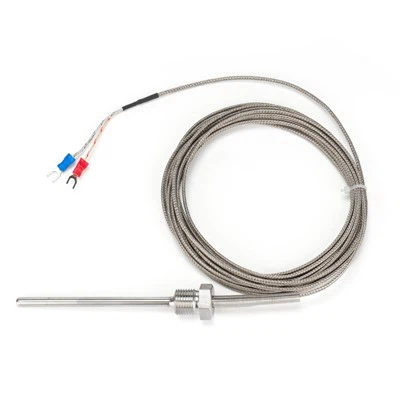
What is the full meaning of Prefabricated RTD?
As a supplier of Prefabricated Resistance Temperature Detectors (RTDs), I am often asked about the full meaning and significance of these essential temperature - measuring devices. In this blog, I will delve into the details of Prefabricated RTDs, exploring their definition, components, applications, and advantages.
What is a Prefabricated RTD?
A Prefabricated RTD is a pre - assembled temperature sensor designed to accurately measure temperature based on the principle of the change in electrical resistance of a metal with temperature. The term "Prefabricated" implies that these RTDs are manufactured in a factory - ready state, which means they come fully assembled and calibrated, ready for immediate use in various industrial and commercial applications.
The basic component of an RTD is a resistive element, typically made of platinum, nickel, or copper. Platinum is the most commonly used material due to its high accuracy, stability, and wide temperature range. The resistive element is housed in a protective sheath, which can be made of different materials such as stainless steel, ceramic, or glass, depending on the application requirements.
Components of a Prefabricated RTD
- Resistive Element: As mentioned earlier, the resistive element is the heart of the RTD. It is designed to have a predictable change in resistance with temperature. For example, a platinum RTD typically has a resistance of 100 ohms at 0°C (PT100) or 1000 ohms at 0°C (PT1000). The resistance of the element changes linearly with temperature, allowing for accurate temperature measurement.
- Sheath: The sheath provides mechanical protection to the resistive element and also helps in transferring heat from the measured medium to the resistive element. It can be designed to withstand harsh environments, such as high temperatures, corrosive chemicals, or mechanical vibrations.
- Lead Wires: Lead wires are used to connect the resistive element to the measuring instrument. They are usually made of copper or other conductive materials and are carefully insulated to prevent electrical interference.
Applications of Prefabricated RTDs
Prefabricated RTDs have a wide range of applications in various industries, including:
- Industrial Process Control: In industries such as chemical, petrochemical, and food processing, accurate temperature measurement is crucial for process control. Prefabricated RTDs are used to monitor and control the temperature of reactors, furnaces, and other process equipment. For example, in a chemical reactor, the temperature needs to be precisely controlled to ensure the quality and yield of the product.
- HVAC Systems: Heating, ventilation, and air - conditioning (HVAC) systems rely on accurate temperature measurement to maintain a comfortable indoor environment. Prefabricated RTDs are used to measure the temperature of air, water, and refrigerant in HVAC systems.
- Automotive Industry: In the automotive industry, RTDs are used to measure the temperature of engine coolant, oil, and intake air. This information is used by the engine control unit (ECU) to optimize engine performance and fuel efficiency.
Advantages of Prefabricated RTDs
- Accuracy: Prefabricated RTDs offer high accuracy in temperature measurement. Platinum RTDs, in particular, can provide an accuracy of ±0.1°C to ±0.5°C, depending on the grade and application.
- Stability: These sensors are known for their long - term stability. They can maintain their accuracy over a long period of time, even in harsh environments.
- Wide Temperature Range: Prefabricated RTDs can measure temperatures ranging from - 200°C to +850°C, making them suitable for a wide variety of applications.
- Ease of Installation: Since they are pre - assembled and calibrated, Prefabricated RTDs are easy to install. They can be simply connected to the measuring instrument, reducing installation time and costs.
Different Types of Prefabricated RTDs
There are several types of Prefabricated RTDs available in the market, each designed for specific applications:
- Armored Resistance Temperature Detector: These RTDs are protected by a metal armor, which provides additional mechanical protection. They are suitable for applications where the sensor may be exposed to physical damage, such as in industrial plants or outdoor environments.
- Surface Thermal Resistance: Surface RTDs are designed to measure the temperature of surfaces. They are typically flat and can be easily attached to the surface using adhesives or clamps.
- Explosion - proof RTD: In hazardous environments where there is a risk of explosion, explosion - proof RTDs are used. These sensors are designed to prevent the ignition of flammable gases or vapors.
Quality and Calibration
As a supplier of Prefabricated RTDs, we understand the importance of quality and calibration. Our RTDs are manufactured using high - quality materials and undergo strict quality control procedures. We also offer calibration services to ensure that our sensors provide accurate and reliable temperature measurements. Calibration is typically performed using traceable standards to ensure compliance with international standards.


Conclusion
In conclusion, Prefabricated RTDs are essential temperature - measuring devices that offer high accuracy, stability, and ease of use. They are widely used in various industries for process control, HVAC systems, and automotive applications. As a supplier, we are committed to providing high - quality Prefabricated RTDs that meet the needs of our customers.
If you are interested in purchasing Prefabricated RTDs for your application, we invite you to contact us for further information and to discuss your specific requirements. Our team of experts will be happy to assist you in selecting the right RTD for your needs.
References
- "Temperature Measurement Handbook", published by a leading industry organization.
- Technical documents from platinum and other resistive element manufacturers.
- Industry standards related to temperature measurement and RTDs.